

Bill here with a quick editor’s note: “Worcester Speaks” is a monthly Q&A series started by our former copy editor Liz and now in the hands of Dani Killay, a one-time subject (number #11) turned author of this fine column! From its inception the idea has been to fill in the “And I Love It” part of the name. To balance out the nasty stuff that goes on at city hall with a spotlight on cool people doing cool stuff out in the community. Please consider contributing, via a subscription, a tip, or a merch order, so we can keep putting out quality, ground-up local journalism like that which you are about to read! Thanks!
If you want to learn the soul of a city, you listen to the people building its foundation from the ground up, brick by community brick. In Worcester, few voices carry the quiet, unwavering authority of Parlee Jones. For over two decades, she has moved through the city’s core not as a politician or a figurehead, but as a gatherer, a shelter manager, and now, as the driving spirit behind The Village—an afrocentric community center that has become a vital organ for cultural learning and collective care.
Our conversation unfolds within the very space she helped cultivate, a building humming with purpose. Upstairs, the Caribbean Carnival Association plans their next event; downstairs, the non-profit Earn-A-Bike repairs and provides bicycles for their community. All throughout, the distinct energy of organizations like Worcester Roots and The Healing Garden intertwine. It is a physical manifestation of Parlee’s philosophy: that progress is a collaborative architecture.
She arrived back in Worcester in 2000 as a single mother navigating systems that claimed to help but that clearly didn’t care, and that lived experience of systemic gaps now fuels a vision that transcends them. The Village isn’t just a building; it’s an ongoing answer to a need, offering everything from Black history education to whale-watching trips, from Kwanzaa celebrations to revolutionary reading groups featuring works by Assata Shakur, Octavia Butler, and Patrice Lumumba.
Parlee speaks with the hardened clarity of someone who has sat across from power—mayors, superintendents, councilors seeking a photo-op—and maintained her focus on true accountability. She views the political system with a healthy skepticism, noting the distrust that keeps voter engagement low, yet she insists on hope, or at least hoping for hope. For her, the work is about fostering hope without illusion, and building strength without spectacle. It’s about discerning between genuine allies and those who would use community as a prop.
Beneath the discussions of grants, programming, and collaboration lies a simpler, more profound current: the imperative to make people feel safe and loved. Parlee’s mission is to carve out spaces where prioritizing connection and community care is the norm, not in an effort to shut out the chaos of our times, but to be in direct conversation with it. Her revolution is one of persistent welcome, a belief that the most resilient future for Worcester is woven in these threads of daily connection, cultural pride, and the courage to care for your neighbor—not just in moments of crisis, but consistently, creatively, and without fanfare.
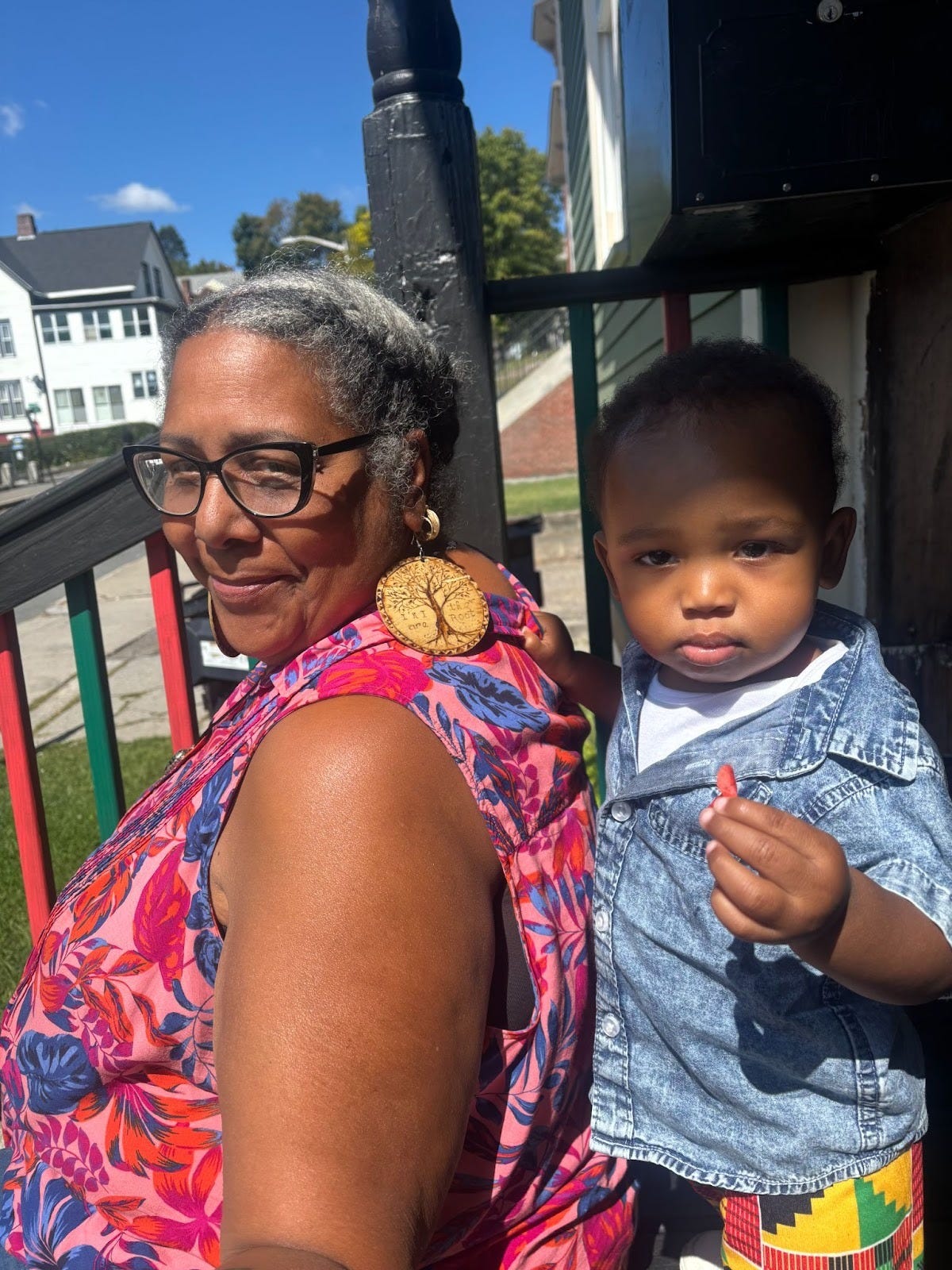
Dani: I first became aware of The Village and of your work in 2022 because you hosted Knitty Council (a grassroots city council watchdog group that meets regularly at The Village)
Parlee: Ah, it’s still here. Yeah, yeah.
So I wanted to learn more about how you came into community building in Worcester and what it’s been like and felt like for you.
You know what the killer is, is that I’ve been doing it for such a long time and we’re still in the same place, unfortunately. And there was folks doing it before me. And there’s going to be folks doing it after me. And it’s like I’ve done this interview a couple times. And I’m honored and humbled to do it again with you today. And I guess I’m pretty consistent over the last 20 years because we celebrated our very first Bob Marley Birthday Bash 20 years ago. So we’ve been celebrating Robert Nesta Marley for 20 years in Worcester, starting at the Worcester Public Library, and so that’s how long I’ve been in community.
Have you been in Worcester all your life?
So I was born in Leominster and then moved to Worcester when I was probably three, and I’ve been here ever since. But I like to say that I did a 10-year bid in Brooklyn. Both of my children were born in Brooklyn, and that’s where I discovered culture and all of that good stuff. You know, being proud of Black history. I’m always proud of being a black woman and black history, but in Brooklyn, it feels like it gave me a sense of freedom and strength and courage to teach others right to provide something that that wasn’t be provided and I think that’s what was the kickoff of me was when I came back home after living in Brooklyn for 10 years rent got a little crazy life got a little crazy and two babies and struggling to get on the J train with a double stroller if you’re familiar with New York another thing. So I said, let me go back home and figure this single mom thing out. And there was absolutely no Black history being taught publicly in schools, anything. So I took it upon myself to just do little things. Starting in Black History Month, because that’s an easy one. We know Black history is 365.
I just want to orient us on a timeline. So, when you came back from Brooklyn, about what year was that?
2000 and I have two babies and back in Worcester after living in this big city and trying to figure out my life with these two little people and housing and everything that goes along with being a mom, you know, that I don’t have to tell you. And so my sister had an apartment at Abby’s House. So, you know, Abby’s has these amazing seven, two bedroom apartments that are absolutely beautiful. And my sister was living there and they let me double up with my sister before double up became a thing. And double up means two families living in the same house. And then she moved out and I was able to keep that apartment. And in Abby’s there was a beautiful little lady named Lydia De la Cruz who was probably four feet tall and a firecracker of a person that really helped me through whatever I was needing to get through at the time. You know, single mom, newly single mom, two kids, trying to get a job, trying to work through the system and get what was supposed to be mine. I’ll never forget a woman at the welfare office, a Black woman. I was trying to figure it out and stay home with my kids for a minute. They were like two and three. There’s 15 months between them. But she told me, ‘honey, don’t use welfare as your husband” at a time where, you know, I’m vulnerable, I’m trying to figure all this out. I’ve worked and put into the system my whole entire life and here I am just leaving a yucky situation, coming back with my kids and this is supposed to help me along and you’re telling me not to use welfare as my husband. So Lydia walked me through that and actually was able to appeal because [the worker] wanted to mess with my money too. She helped me advocate for myself. And I did get an apology from [the worker]. It was one of the most pitiful apologies I’ve ever heard in my life. But it is what it is. The systems are not going to change. That’s why we have to do what we need to do in order to take care of each other.
Did you stay involved with Abby’s House?
Yes. I actually got back on my feet. My first job in Worcester was with the Worcester Head Start program. And then I got my own apartment, moved out of Abby’s House. And Abby’s invited me to come back and be their shelter manager. So I was the shelter manager at Abby’s House for 17 years.
When did that tenure come to an end?
When we started this venture. In 2020. March 2020, actually. It was the beginning of a lot of things back in that time, you know, and COVID and all of that stuff that came along with that. But I actually lost a grandson.
I am so sorry.
Thank you. At the hands of the only Black midwife [in Worcester]. That’s what I thought [she was]. But it’s a lie. She’s a horrible person. She did some horrible things that night and my eternal Oma only stayed with us for nine days. And so I’m very passionate about birth work also. I make sure that people get what they need. So anyway, that just totally changed everything for me and we had started working with, are you familiar with Stone Soup?
No. No, I don’t think I am.
So this amazing building was built in 1886. And it was a single family home. And then at some time, it became like women’s housing. And then it was actually Athy Funeral Parlor, which Athy is still alive in the city. There’s still a business in the city. Then it became The Teacher Store and if you lived here in the 70s and 80s, The Teacher Store was a thing. You would get all your school supplies at The Teacher Store. Right here, in this little spot right here. Yes, and then it became Stone Soup Artists & Activists Collective.
Parlee places a Stone Soup bumper sticker between us on the table top and slides it my way.
I feel like I’ve seen those stickers my whole life and had no idea what they were.
So Stone Soup Artist Activist Collective was a collective of organizations and people that were doing amazing work. Worcester Roots is still in the building and they have been around for a while, since Stone Soup. Earn-A-Bike is in our basement and they like to say they came with the building. And then we came in. Unfortunately, we can measure time by the death of Black men at the hands of the police. So George Floyd comes around, and Worcester is the second largest city in New England. And we don’t have a Black community center. We have plenty of Black churches. We have a couple organizations. But we didn’t have a place where we can gather.
So when you started The Village only a handful of years ago, there was no black community center in Worcester?
No. There were back in the day. So I came up in Worcester in the 70s and the 80s, and we had Black Elks, we had Miss Black Worcester, we had Miss Third World, we had Prospect House, which was the biggest black organization, which actually turned into the Willis Center, and then it was dismantled. So we are here. We are here and we are grateful to have this amazing building. It’s such a beautiful building and so it’s our turn.
So now that you are here, could you tell me a little bit about what goes on at The Village, the programming that you offer, or just how it all works?
Yeah, definitely. We are an Afrocentric cultural learning and healing center. So we like to say what we do, we teach black history, teach women’s history, we teach whoever’s history needs to be taught in the moment from a human lens, we would like to say. Because there’s not a lot of places that teach Black history, especially in our schools, to our youth, to even adults, to new immigrants. They don’t know the story of African-Americans. And it’s so key to what is happening in the world right now. Our stories and our resilience and the things that we’ve been through will help the whole world through, especially this United States. So, we teach Black history. We do healing. We do all different modalities of healing, from Reiki to sound baths to just conversation. We have community conversations. We have BIPOC women healing circles. We do trips. We do two trips to the beach every year, one in July and one in August to Salisbury Beach, and we’ve been doing that for about 20 years. The very first time I did it was at Abby’s when I was there, and we had women on the bus that were like, “my gosh, I haven’t been to the beach in seven years”. I need to go at least three times a summer, if I’m not there more. You know, because it’s so healing so we’ve been doing that for 20 years and our newest thing which came about through The Village is we buy out a whole whale watch boat. Every two years, because it’s a very expensive trip, and we’re not expecting to make money on it, we buy out the whole boat and bring five busloads of neighbors to Gloucester to get on the boat. And so far, we’ve seen so many whales, porpoises. We had a mama porpoise and a baby porpoise the last time we went. So this year coming up, 2026, we’ll be going. We will be going if we can get that cheap boat the last cheap day before it turns into the summer rates. We try and get that last date so we only need to charge $25 a person to get on the bus. And when you get on the bus, you get a raffle ticket, you get a goodie bag, snacks. Then we have fun on the bus, then we get on the boat, we have a ball on the boat, and hopefully everybody’s falling asleep on the way home.
So that brings me to the practical question of, how do you fund all of this?
My daughter [Sha-Asia Medina] has gotten every grant that she’s written, knock on wood.
And that’s where we are right now.
Where we’ve seen so many challenges to educating on Black history specifically, have you seen more obstacles to finding funding?
Not yet. We’ve decided to just be quiet, but not quiet. We’re still going to do what we do, but not as loud in certain spaces. We’ll be loud where we need to. We’re not going to stop being loud or supportive and truthful. Always be truthful, right? We’re always going to speak truth, wherever we are. And sometimes that’s not an easy conversation. How do we protect ourselves from hate and still do what we need to do? And protect others when they’re in our space. Sometimes when we have events, like we’ve had a lot of pro-Palestine events here, or just pro-human. I’m not even going to call it pro-Palestine, it’s pro-human. We don’t want people being murdered. They had some stuff that was coming with them, but we had somebody on the door to make sure we knew who was coming in the building, which we can do. Worcester in general, like the politics are so ugly. I don’t want to be on anybody’s radar unnecessarily, you know, from the PD to some of these politicians. You know, we like to say we’re not political, but how can we not be political, you know? And is it political when we just care about each other? How do we just care about each other, living human beings, and wanting what’s best for other families? What is that then?
Do you find engaging with Worcester politics worthwhile after watching things kind of stagnate for so long, this past election being specifically disappointing?
Horrible. Just Horrible.
Any words of wisdom for those of us who are going to need to find the stamina to do this for another 25 years maybe?
I was actually at a meeting this morning with the superintendent and the mayor to talk about what’s happening with the schools. Mainly everybody were focused on how many staff have gotten attacked.
Tell me a little bit more about that.
The report came out not too long ago. There was an article in The Telegram that talks about the data and violent incidents in the schools. And if you read the article, you see there’s a couple of school committee members that we know are openly racist and will never vote for the people. So they are the ones that leaked this [report] and wrote most of the stuff in the article without really doing any research. So, I still have one finger in the cookie jar, right? If we call it a cookie jar, or maybe the snake pit because I like cookies. Snakes, not so much. So I, again, Black history, right? Everything that Black folks have done to lead up to our little right to vote. I don’t fully trust this system. I will never fully trust this system, but I’m going to keep a little finger pinky in there, because that’s part of keeping hope alive, right? But at the same time, I’m open to building other systems, like building our own community-based systems, like mutual aid and the free fridges, whatever else we can do to take care of each other. I don’t know what else that looks like, but I know it’s going to have to look like something.
What are your thoughts on the voter piece and voter engagement? Trying to get communities to take their power back through the ballot box. Do you feel like that’s just something white people say to make ourselves feel better? Do you feel it’s possible?
I don’t know. I know that young folks are disenchanted. You know what I mean? That’s the generation that we need to come on and do this. I know that my own only do local [elections]. Thank goodness they do local. But they also see hands-on the changes and the challenges that happen. I don’t know. I just vote because it’s a little piece of what I can do personally. You know what I mean? I don’t even know if it matters. But for me, there’s so much more you could do. That’s like folks that go to the MLK breakfast and they can check that off. I’ve done everything for the year by just going to the breakfast and then you don’t see them anywhere else. So I get it. I get it.
If there are people reading this, who don’t know where to go or where to start. They’re looking around and maybe they’re not as familiar with Worcester or maybe they’re just in their own personal bubble and they’re not familiar with community organizing, community building, mutual aid. Where do you think are good places for people to enter that space?
For white folks, I always suggest my beautiful people at SURJ which is Showing Up for Racial Justice. So you can work through topics of privilege and things that will make you uncomfortable or say crazy things when we are together, right? SURJ does a lot of good work. Worcester Interfaith with Roberto Diaz does a lot of good work. The NAACP Worcester with Fred Taylor does a lot of good work. Neighbor to Neighbor does a lot of good work. Love Your Labels does a lot of good work. AIDS Project Worcester does a lot of good work. In the schools there’s
Racism-free WPS. So there’s definitely people doing the thing. There is also SAGE [the Worcester Solidarity And Green Economy Alliance – formerly the Worcester Green Jobs Coalition] They actually meet here. There are so many, and then the thing is to make sure that all these organizations stay connected.
Yes. With so many different organizations involved, is there any kind of steady organization between them? Communications, conventions, summits?
That would be amazing, right?
But it doesn’t exist at the moment?
That we know of? No. And I know that it’s quite a task to try and put that all together. I’m open to being a piece of it, but it’s a lot. That’s a lot. But it would help. It’s like, what agencies, even if they’re traditional agencies, who’s really doing the work out there, right? They’re getting all the money, and are they doing what they’re supposed to?
That’s a philosophical back and forth I have with myself. Because, if all the people that want to do good work leave those official channels, does that create its own sort of power vacuum problem.
Well, some of them are going to leave. Some people are system people. We’ve got plenty of gatekeepers that will keep it going. That’s one thing that is never going to change. The system will always be there. Right? It’s always going to be there.
Until it’s not?
See, that’s hope, right? That’s the piece. We have to keep that hope alive. If we give up hope, even in this crazy voting world, like, if I’m not voting. If you’re not voting. Then all the icky people are just going to keep running and winning.
We see it over and over again in this city, only certain areas and populations are really making these decisions through the vote due to disproportionate turnout. Does that feel like a reflection on that hope maybe?
So if all the good folks have now just woken up, right? To see what’s happening and to want to change it. Then why [did they] go vote for Joe Petty? What change are you trying to see, people? Like, you’re saying the same shit.
Seeing some of the combinations of yard signs were truly baffling this year. Do you feel people are checked in to what’s going on?
This was definitely a telltale election. It really, really was. It was horrible. There was a lot of disappointment. We have all these folks like Worcester Indivisible–
Wait, Worcester Indivisible or Indivisible Worcester? Because there’s two separate groups.
Both of them I wish would reach out to my people at SURJ because I think that coming out of the George Floyd protests everybody is like you “need to come out and march.”
Let’s dig into that. Protests and demonstrations. What are your thoughts on protests and demonstrations in today’s world?
Protests are going to do what it does. You know what I mean? It’s a way for people to release what they’re feeling. A lot of good conversations can happen in those spaces. A lot of good things can start coming out of those spaces. But protests without next steps? It’s just a way to let off steam. I don’t think we’ve reached protests where we’re tearing down stores. You know what I mean, really?
Or even just acts of civil disobedience. Yes, Dr. King led marches, but if we contextualize those marches as to where they were marching to and from and what they were doing at the time. They were committing acts of civil disobedience. So do you feel like we’ve maybe lost the plot a little bit if we’re holding permitted protests?
Yeah, because while King was marching, there were definitely folks that were plotting other things. Malcolm was like, “we’re not going to do that”. Kwame Ture was like, “and marching for what?”, You look at like the [Black] Panthers, you look at folks that wanted the challenge in a different way, and they were just taken out. Fred Hampton was murdered December 4th, 1969. And he was doing it right. And what is right? What is the right way to protest? What is on your heart? And what are you protesting? Are we protesting the price of milk? Or are we protesting another Black man being shot down by the police? And where do they intersect? And what do we do at the intersections?
But in that heat of that moment, the milk doesn’t matter as much as the life. So if you are out here for the milk and you wasn’t out there for the life, I’m looking at you. Like, do I want to walk next to you? Do you really think Black Lives Matter? Or are you just worried about the bread? So that piece is what had me step back a little bit because I know some beautiful, amazing accomplices, forget allies, I’m looking for accomplices. I’m looking for John Brown, right? I am looking for John Brown. That’s my standard. And Worcester does have some amazing community allies and people that just want to do good. And they are, little by little. And hopefully they add up, you know? Dropping off food at the fridge, and telling the Mayor, “I’m looking at you. I’m watching your ass. I’m not happy with you.” Does it matter? I don’t know, but I’m not going to be just smiling in your face.
It matters to me. It matters to me that there’s still people doing it, because if they’re not, then where are the standards? Who’s going to be held to account? Who’s going to do the holding?
Okay so, we do Juneteenth, also. We’ve been doing the flag raising for maybe five years now. In the first two years, we would raise the flag at City Hall. Oh my gosh, the way that everybody, all those little city councilors ran for the picture. Candy Carlson? Are you fucking kidding me?
So the next year, I was like, I’m done with this shit. We’re not doing this anymore. We invited who we wanted to be in the picture. And Manny Jae Media turned the camera to the folks that didn’t get invited right at the right moment. So no, I’m not. I’m not taking a picture with you. I’m not. I don’t need to be in the pictures. I’m good. You won’t use my face.
To be used as a prop?
As a prop, period, end of story. That was a problem. We all have to, and it’s scary sometimes to stand up for what’s right, but we just gotta do it. Mayor Petty never comes to my events. I don’t want him to, until he can act right. And I see people get all excited because he came to their events. Why? Why’d you invite him? What has he done for you?
We just need to remember that we belong to each other. Nobody else is coming to save us. And just be kind. Be as kind as you can… Unless there’s a reason to be mean. Like, you don’t have to be nice to everybody.
Never a truer word. So, end of the year. 2026 on the horizon. What’s on your radar for the year?
So for us, we celebrate Kwanzaa at the end of the year. So it’s the seven days after Christmas that goes from the 26th to the 1st. And it’s a way to celebrate unity, collective work and responsibility, faith. We come in and we celebrate at that time because these are reminders. Unity is a reminder. Collective work and responsibility is a reminder. Peace is a reminder. Cooperative economics. All of the things that we need to be doing on the regular, that we should be doing, we celebrate at the end of the year. And taking all of that into the new year, regardless who’s in office. Like, regardless who’s in office, we’re still going to make sure we do whatever we do. We’re still going to go to the ocean. We’re still going to teach Black history. We’re still going to celebrate BIPOC women. We’re still going to celebrate women. We’re still going to teach babies.
The Village Worcester is an Afrocentric cultural, learning, & healing center that builds grassroots power by connecting BIPOC groups, healers, and individuals whose work is rooted in racial justice, learning, creativity, community, & healing. Visit their website for more information on their community programs and how to get involved.

Loved reading all about Parlee. Great interview Dani! ❤️. Just what the doctor ordered.