

A quick personal note before we begin:
If you’ve been reading WPS in Brief for a while, you’ve probably noticed that I spend a lot of time trying to help the community understand what’s happening in Worcester Public Schools. I do that because I believe knowledge is power, and informed families and strong public schools make for a stronger Worcester.
Today, I’d like to ask you to help me pay it forward.
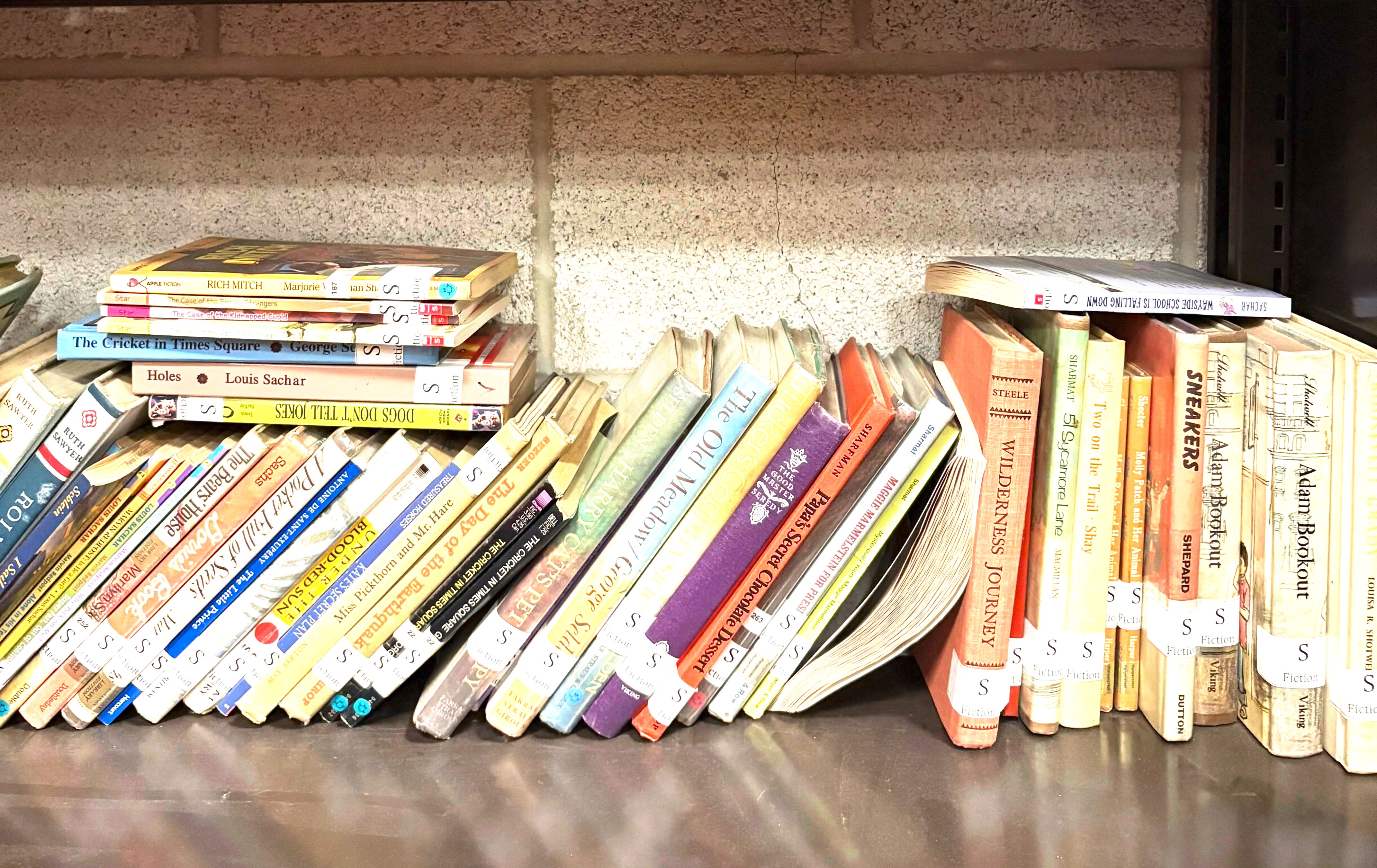
The Worcester Elementary School Library Coalition is a volunteer effort to give every WPS elementary student library access by 2030. In partnership with Worcester Public Schools, school principals, and the Worcester Public Library, we are working this summer to help launch or strengthen libraries at six elementary schools: Belmont Street, Flagg Street, Gates Lane, Nelson Place, Norrback and Quinsigamond. Our biggest challenge right now is getting books on the shelves before students return in August.
If WPS in Brief has been helpful to you, I hope you’ll consider making a donation to help put books directly into the hands of Worcester students. Every gift, large or small, moves us closer to opening these libraries with the collections students deserve.
Thank you, as always, for reading, supporting, and caring about Worcester’s schools.
Here’s the agenda preview:
June 18 School Committee Meeting
The next school committee meeting is scheduled for Thursday, June 25, a very late in the month rescheduled date due to middle school graduations and the City Manager’s State of the City address. The budget hearing starts at 4 p.m., executive session starts at 6 p.m. and the regular meeting starts at 6:30 p.m. For this meeting last year they held executive session at the end of the regular meeting, which was nice because it makes the timing of public comment more predictable, and allows people who might want to participate to plan accordingly. Not sure why they didn’t do that again. Also, there’s no guarantee that they’ll get through the rest of the budget in two hours. See the agenda here. You can watch it via zoom or Youtube Live. Spanish translation is available on zoom.
Here’s what’s on the agenda:
Budget Hearing.
The school committee will continue discussing each budget line of the general fund at 4 p.m. Last meeting they got all the way through to the facilities non-salary capital line, and will probably start from administrative salaries and move down. The budget hearing will last about two hours and this meeting is typically when members present motions to move money between accounts (unlike city council, the school committee has the power to do that.) There is no public comment before the budget hearing. If you want to see what’s in the proposed budget read the May Brief.
Limiting individual device use in PreK through Grade Two.
Worcester for Safe Student Technology (WSST), a parent, caregiver, and educator advocacy group (of which I am a member), has a public petition calling for limits on individual internet-connected device use in Pre-K through grade two classrooms and for policies that prioritize hands-on, teacher-led, screen-limited learning. The petition, which has gathered 447 signatures from members of 51 schools across the district, includes exemptions for students who require assistive technology and for technology enrichment classes. The group points to growing national concerns about screen time in schools, including recent action by the Los Angeles Unified School District, and argues that young children benefit most from direct interaction, play, movement, and hands-on learning. If you are supportive of this, email school committee members and let them know.
So what will happen to the $100K?
Relatedly, in response to a report request from Sue Mailman (at-large), the administration is recommending a shift to a 3:1 student-to-iPad ratio in Pre-K through grade one. While modest, it is one of the first tangible changes to emerge from ongoing parent advocacy around technology use in the early grades. That change would save at least $100,000 in the FY27 budget.
The larger budget question is where those savings should go. Worcester for Safe Student Technology has suggested that the district consider investing those funds in books for new elementary school libraries as Worcester works to improve literacy outcomes.
The discussion also comes as instructional technology is one of the fastest-growing areas of the budget. Technology spending increases 65 percent next year, driven largely by new device leases, as Chromebooks and MacBooks purchased during the pandemic reach the end of their useful life. At the same time, the instructional materials line, which helps schools purchase classroom supplies, classroom furniture, art materials, recess equipment, and other essentials, is decreasing.
As the district transitions to a long-term device leasing model and faces projected budget shortfalls and potential layoffs over the next three years, the School Committee will need to decide how best to use any savings generated by reducing device use in the elementary grades. Unlike technology leases or adding administrative positions, which create recurring annual obligations, investments in school library books are largely one-time purchases that continue benefiting students for years without adding to future budget pressures. It also raises a question I’ve been wondering about for some time: can the district honestly afford a one-to-one device model anymore in K-6? With technology lease costs rising as the district faces significant budget cuts over the next three years, that’s a conversation worth having.
Redistricting updates.
The administration is providing an update on the School Boundary and Quadrant Alignment Project, which will eventually redraw school boundaries and feeder patterns across the district. Since the spring, the district has analyzed enrollment and building capacity data, formed an advisory working group (of which I am a member), and held community meetings that generated more than 300 survey responses. Initial boundary scenarios are expected to be presented in August, followed by public hearings this fall, with a final School Committee vote anticipated in December and implementation scheduled for the 2027-28 school year. (For a more detailed background on the topic, check out what I wrote back in March.)
Key areas I want to highlight that I think families and students will be happy about: the district is looking at expanding transportation options, creating more compact boundaries that could allow more students to attend schools closer to home, and making adjustments to middle school bell schedules. They’re also exploring opportunities to expand full-day preschool as the district moves away from half-day programs, and increasing access to after-school care through community partnerships. While there are still a lot of details to work out, these are all issues that came up repeatedly during community meetings and have the potential to make a big impact for students and families.
The administration is also proposing several school name changes to better align school designations with current programming. The proposal would remove the “Community School” designation from Belmont, Elm Park, Quinsigamond, and South, arguing that all Worcester schools should function as community schools. It would also remove the “Magnet” designation from Canterbury, Jacob Hiatt, and Tatnuck, saying these schools no longer operate distinct citywide magnet programs. Jacob Hiatt, in particular, would be intentionally redesigned as a neighborhood school under the proposal. These recommendations will be considered alongside broader redistricting proposals this fall, with public feedback opportunities before a final School Committee vote expected in December.
School Calendar Changes.
The Calendar Committee is recommending several changes to future school calendars after meeting throughout the spring to review scheduling practices and develop a more consistent approach. One proposed change is moving the January professional development (PD) day to October, reducing the risk that it would need to be canceled due to snow like it was this year. The calendar committee is also recommending that the November and March PD days be moved to Fridays, creating a more predictable districtwide schedule for staff and families. But the calendars in the backup maintain the November professional development day on election day, which is a Tuesday. So that’s confusing.
Those November and March PD days were originally scheduled on election days after concerns were raised by then-School Committee member Laura Clancy about student safety in schools that serve as polling locations.
Other Items.
Here’s some other items on the agenda:
The committee will take a final vote on the bullying preventionand intervention plan.
A report showing line item improvements for Worcester Technical High School from pre-SOA (Student Opportunity Act) until the end of SOA.
The district plans to hire a district-wide guidance counselor.
A report on the projected students for enrollment for the next few years. Which shows that elementary school enrollment is projected to increase each year, despite concerns of declining birthrates.
A report on the current custodial and grounds staffing at Foley Stadium.
Data on enrollment and participation of Hispanic/Latinx students in AP coursework.
Report on the closing of the alternative programs as requested by two parents in a public petition.
That’s it. Have a great week. If you have feedback you can always get in touch: aislinn.doyle@me.com
Hi! I’m trying to make a donation but neither link seems to be working?