

For the low and completely voluntary price of $5 you get to take a manner of ownership over the Worcester Sucks project. We cannot build or sustain this operation without our paying subscribers. It’s the only revenue source. And this operation happens to have the best education reporting in the city, hands down. If you subscribe, you’re the best. If you don’t yet, what better time than now? —Bill

Welcome to the October issue of WPS in Brief. This month covers key topics from two school committee meetings and three standing committee meetings.
Let’s get to it:
Election 2025.
November 4 is Election Day for the city council and school committee. You can vote early at Worcester Public Library all this week or vote on Election Day (friendly reminder there’s no school that day!) Please make a plan to vote. Here is my election guide.
Doherty Memorial High School Naming Committee.
There is a naming committee meeting on October 30 at 5 p.m. at the DMHS Guidance Seminar Room E230. The agenda is to name a space at Doherty Memorial High School after Lt. Jason Menard. Based on the conversation at the July Finance, Operations, and Governance standing committee meeting, the request from his family and many members of the public is to name the new Doherty athletic field after him.
Strategic Plan Updates.
The Superintendent’s Report for the October 9 meeting was on Vision to Action...Strategic Plan Status Update. Dr. Andrew Lampi, Research and Evaluation specialist in the Office of Research and Accountability (ORA), presented on how the office came up with definitions of data points and established reporting systems with timelines. From there, ORA created a data point tracker, and a public progress monitoring dashboard, which allows you to see where the district is at with each data point by year. It’s pretty impressive, and I appreciate the transparency in making it public. Here’s a screenshot of one small section:
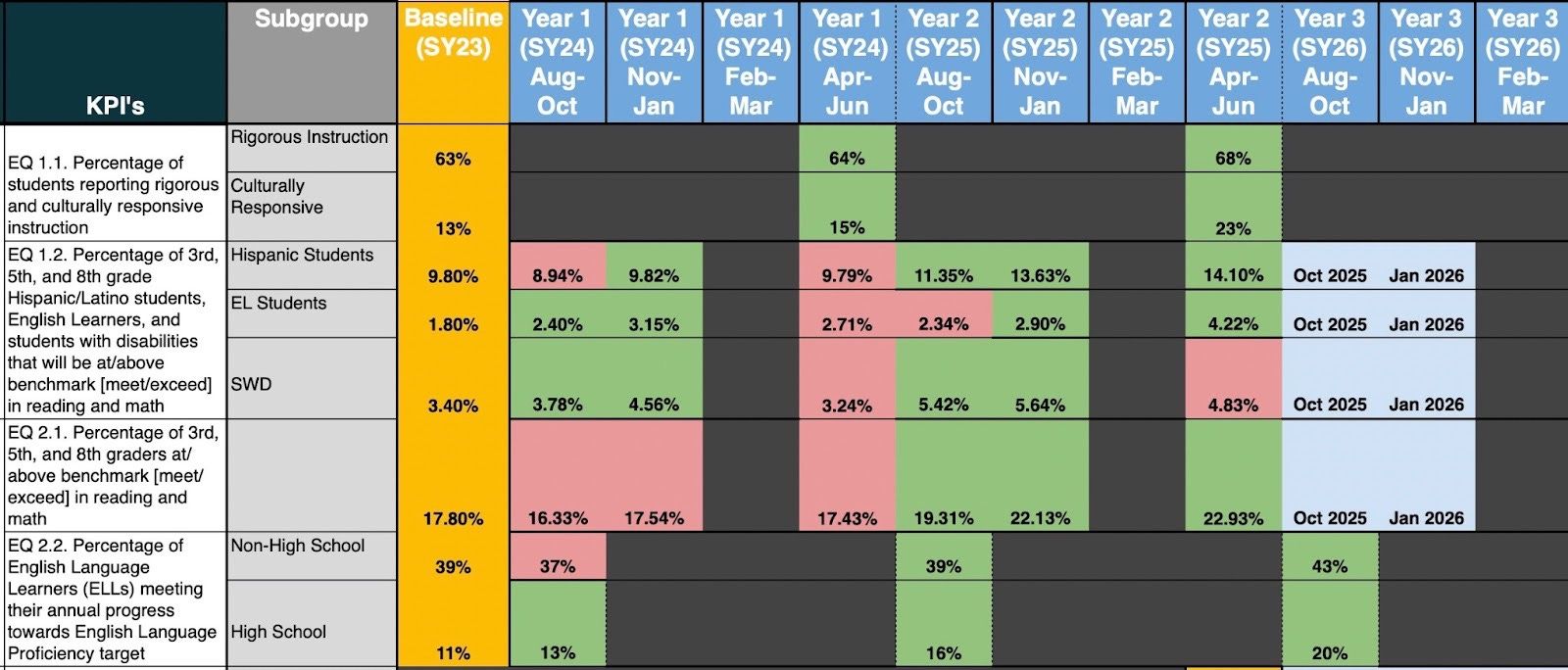
This strategic plan monitoring is critical for the school committee to do their job, which is to make sure that the strategic plan is followed and implemented (and all their work should point back to that: it is the road map for the district). This was not doable before 2022. Two big reasons for that are due to how it was prioritized: the software used for these dashboards was purchased in the last three years, and the staff of the Office of Research and Accountability are mostly all new and have the skills to do this work. That it was made a priority speaks to the seriousness of previous superintendent Rachel Monárrez and current superintendent Brian Allen in making sure the school committee and the district has the data needed to monitor the strategic plan goals.
Accountability Data.
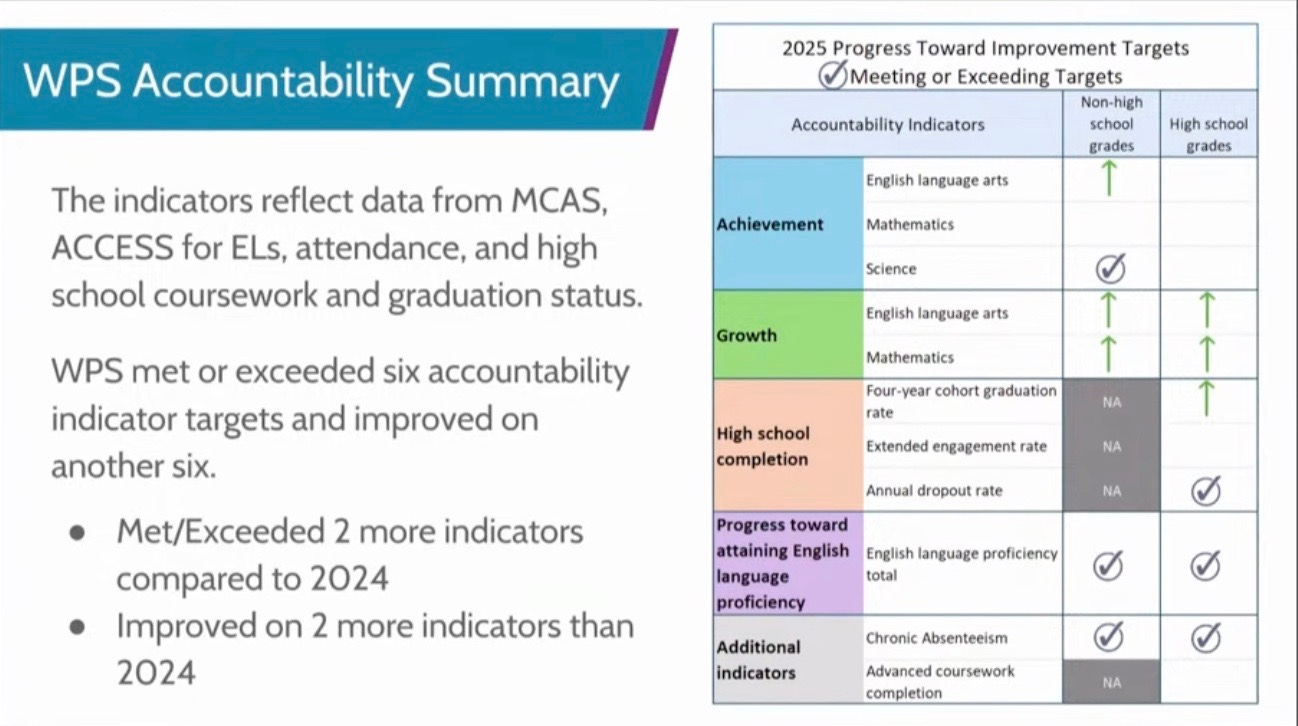
For the October 23 school committee meeting Dr. Marco Andrade, Director of Research and Accountability, presented on school accountability results. The Massachusetts Department of Elementary and Secondary Education (DESE) accountability system is used to measure schools against other schools in the state and the system has a number of indicators. For elementary and middle schools the accountability scores are based on 60% Achievement (MCAS scores), 20% student growth, 10% English language proficiency and 10% chronic absenteeism. For high schools the accountability scores are based on 40% achievement (MCAS scores), 20% student growth, 20% high school completion, 10% English language proficiency, and 10% chronic absenteeism and advanced coursework. These indicators and percentages have been stable since 2023, when the district met 41% of its targets. This year the district met 47% of its targets. You can see which indicators the district met or exceeded in the chart above.
Updated Worcester Tech and Career Education Admissions Policy.
An updated Worcester Tech/Districtwide Career Technical Education Admission Policy was approved by the committee, reflecting the changes mandated by the state. The new policy eliminates lottery tiers, but students receive an entry into the lottery for filling out an application (1 entry), if they meet attendance criteria (+1 entry), meet discipline criteria (+1 entry) or have a letter of recommendation (+1 entry). According to the policy “The weight assigned to each lottery number will correspond to the number of entries determined from the criteria listed above. (Example: a student with 4 “entries” will have a weight 4 times that of a student with 1 “entry” and thus a 4 times greater chance of their lottery number being drawn).” Also approved was a Middle School Pathway Exploration Policy as referenced in the CTE Admission policy. Both policies are due to the state by November 1.
High School Grading.
The high school grading policy continues to be debated by the school committee, this time in the Teaching, Learning, and Student Success (TLSS) subcommittee. At the TLSS meeting, Deputy Superintendent Marie Morse shared that as the district is working towards how to fulfill the competency determination requirements for graduation (now that it can’t be the MCAS), part of the state’s stipulations is each district must have a grading policy, which Worcester does not currently have. Morse emphasized that a grading policy is an important next step to “ensure that we have rigorous expectations, and students are being graded equitably across schools.” She continued, “The longer we go without structure around grading the longer this uncertainty exists within our district. And in a time when we’re certifying competency without MCAs we need to be sure we’re providing guardrails around grading.” The TLSS committee voted to send their recommendations to Finance, Operations and Governance, but with a motion to recommend maintaining 65 as the passing grade, as opposed to changing it to 60. Districts must submit their competency determination policies to the state by December 31.
Buildings.
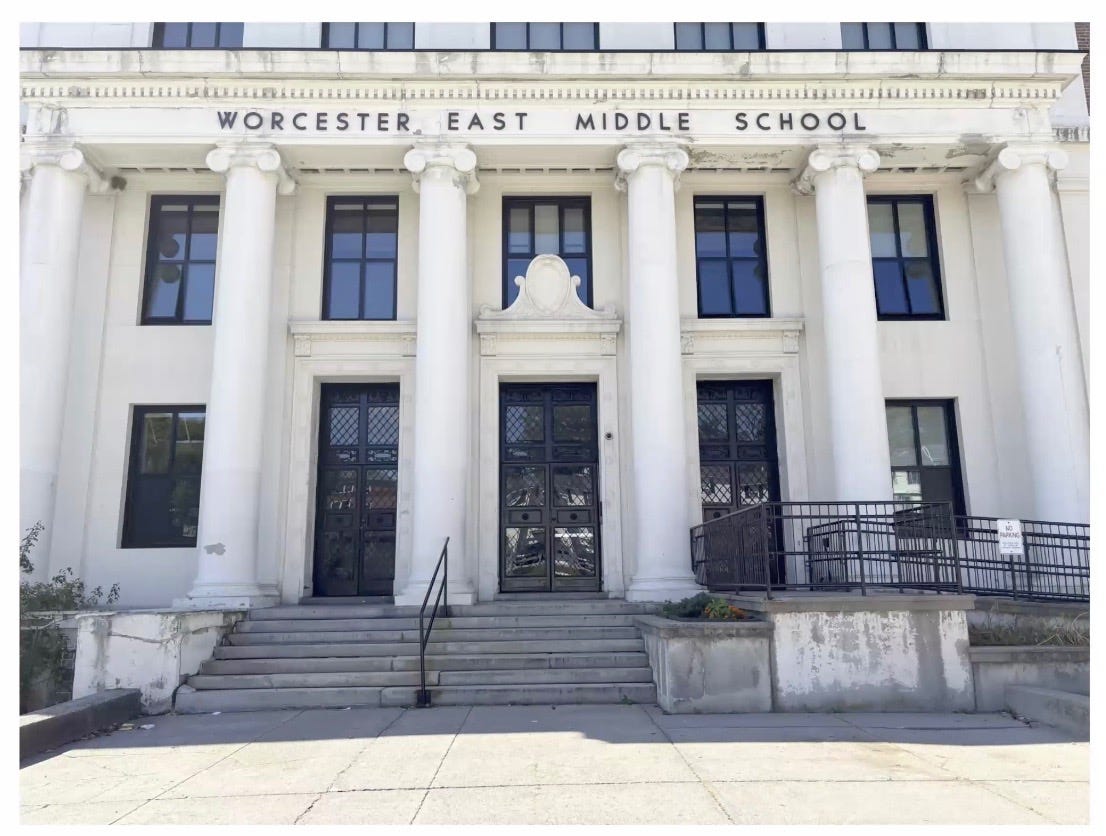
In the quarterly building maintenance and facilities report there were dozens of projects presented, all in various stages, including new windows at Worcester East Middle (a $7 million project paid for by a state grant), a new playground at Jacob Hiatt, updates to SAIL classrooms, and the opening of the Doherty athletic field/fieldhouse. Check out the report in the backup of the agenda for specifics. Accelerated repair projects for Rice Square (roof, windows, and exterior doors) and Belmont St. (roof) were also submitted to the Massachusetts School Building Authority (MSBA) and a decision should be made on October 29.
Meeting Moment to Watch.
School committee member Alex Guardiola (district D) requested a report on how to expand JROTC in the district. He, along with Dianna Biancheria (district C) and Kathi Roy (district E) discuss the report, talk about how JROTC can help Worcester youth, and lament that JROTC is only offered at South High. Some context: a national analysis of JROTC found that, “ public high schools with larger-than-average minority populations and in schools serving economically disadvantaged populations are also overrepresented as JROTC host schools…While advocates for JROTC point to positive outcomes for high-risk youth, some critics have argued that it unfairly targets low-income and minority communities for military recruiting.” For a contrasting example, Guardiola’s alma mater, St. John’s High School in Shrewsbury, has never had a JROTC program. This clip is long, at eight minutes, but it gives a good sense of what a school committee meeting can be like.
Recommended Reads.
If you have been a long time reader of this substack, you know I am a BIG fan of the work done by the Worcester Regional Research Bureau. And this month they released an excellent report, Fixing the Foundation, which details how inequitable the state funding model for new school buildings is. I know you probably won’t read the full report (you should!), so here’s summaries by GBH and the Commonwealth Beacon.
Apparently, the state uses AI to grade student MCAS essays, and a teacher in Lowell (who was reading her students’ essays OVER THE SUMMER) discovered that the scores “didn’t seem to add up.” Turns out that at least 1400 essays were incorrectly graded, including Worcester students. It’s not clear how the company, Cognia, who was paid $36 million for the MCAS contract, “corrected it” and how we can be sure there aren’t more. I emailed DESE to ask if the AI company keeps student writing and/or uses it to train its AI model, but haven’t heard back. There are so many ethical issues around this I don’t even know where to start, but if you’re concerned, I encourage you to write your state representatives and let them know.
Upcoming Dates.
Doherty High School Naming Committee Meeting on October 30, 5 p.m. at the DMHS Guidance Seminar Room E230
Just one school Committee meeting next month on November 20, 6 p.m.
Finance, Operations and Governance is November 10, 5 p.m.
Teaching, Learning and Student Support is November 13, 5 p.m.
Also.
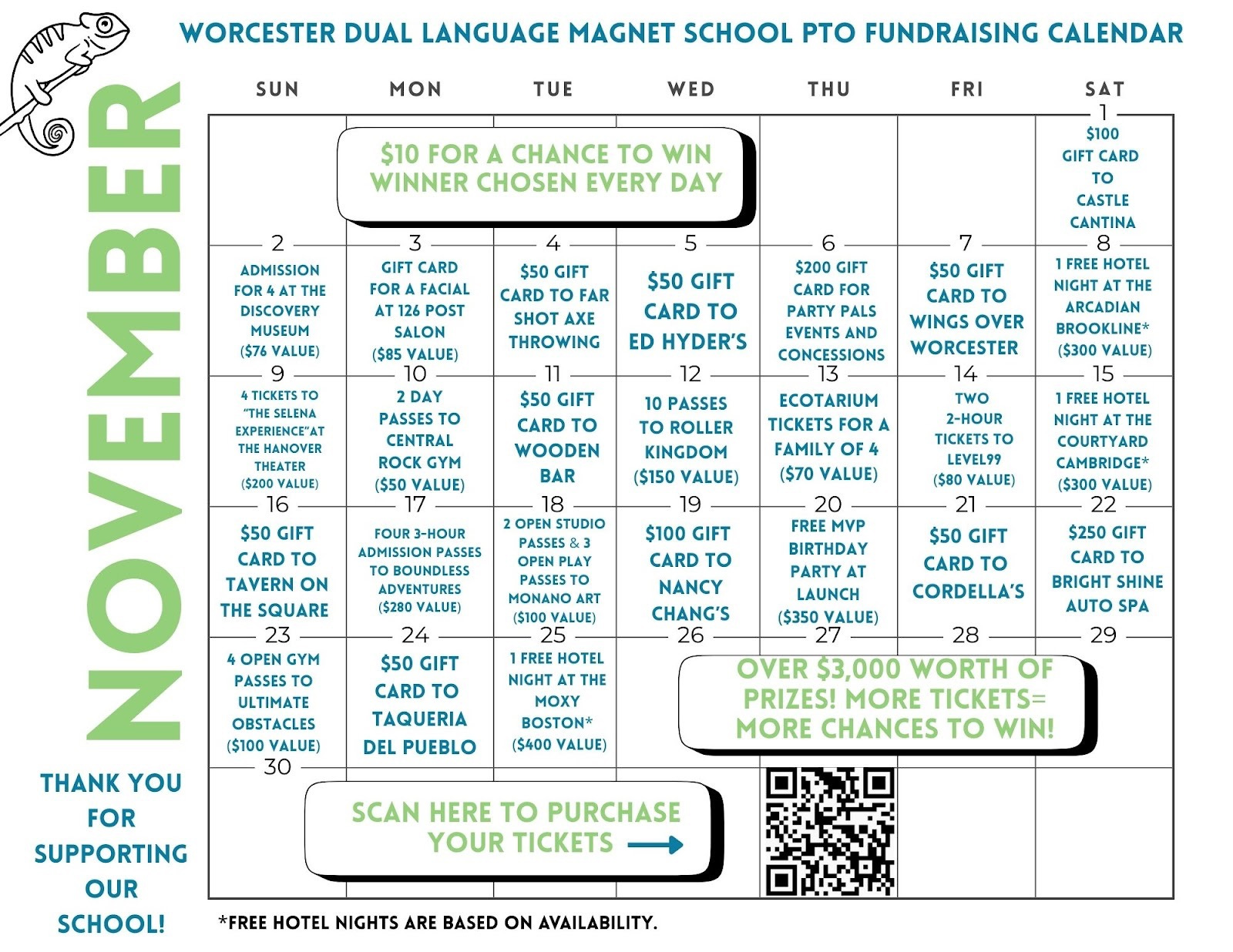
Worcester Dual Language Magnet School is doing a calendar raffle fundraiser with some excellent prizes. Get your tickets while you can!
Thanks for reading. See you next month when we’ll know who will be representing us on the school committee for next term.
THANK YOU for bringing attention to the AI-MCAS grading debacle. I'm surprised this hasn't gotten more attention in the MA edu convo. If you do get a response from DESE, I'd love to hear anything that you're able to share about what they say.
Considering that 96% of EdTech companies sell student data, I would assume this AI company is likely not part of the 4% not abusing access to our students work/personal information. (Source: https://www.the74million.org/article/startling-96-of-school-tech-exposes-student-data-research-finds/)
Also, rumor has it that many of those $7 million windows at East Middle don't functionally open...... I'm sure they'll fix it when they rebuild the school!