


Welcome to the March 2026 WPS in Brief. This month covers key topics from two school committee meetings and the redistricting forum, as well as some other important updates.
Let’s dive in:
Potential Conflict of Interest.
The School Committee is currently negotiating contracts with multiple collective bargaining units, including teachers, assistant principals, paraeducators, and transportation staff, among others. Until this current committee, it was unprecedented in Worcester for a member to have immediate family employed by the district. Now, three members do: Maureen Binienda (daughter Mairecait Binienda, teacher), Kathleen Roy (daughter Katie O’Leary, School Adjustment Counselor), and Molly McCullough (husband Donald “Moose” Huban, Climate and Culture Specialist). Coincidentally, all of them work at Burncoat High. Binienda and Roy’s children were hired before they were elected to the school committee; McCullough’s husband was hired in August of 2024, while McCullough was serving on the school committee.1
Back on November 4, I requested the executive session minutes from previous meetings, which, after filing an Open Meeting Law complaint, I finally received on March 9. The minutes from September 18, October 9, and October 23 show that Binienda, McCullough, and Roy did not recuse themselves from discussions related to collective bargaining that could impact their family members.
A 1984 opinion from the State Ethics Commission states:
“School committee members may not participate in any way in the formulation, adoption or revision of any aspect of the budget or a collective bargaining strategy or position which may relate to the wages, hours or conditions of employment of any member of his or her immediate family employed by the school department. This principle must be followed both if the family member will be directly and immediately affected or if it is reasonably foreseeable that the family member’s interest will be affected.”
The first recorded recusals from Binienda, McCullough, and Roy happen at the November 20, 2025 meeting, sixteen days after my request. The minutes also note that “it was recommended that any individual with an ethics question contact the state board of ethics for guidance on recusals,” without identifying who made that recommendation.
There is precedent suggesting that even across different bargaining units, a financial interest may still exist if those units are part of a union that negotiates jointly across contracts. Binienda and Roy’s daughters are part of the A/B unit of the EAW, which includes teachers (A) and non-principal administrators (B). McCullough’s husband is part of the paraeducators unit. The EAW also represents bus drivers and monitors, parent liaisons, therapy assistant and ESL Tutors.
Given these circumstances, it appears that for at least a few meetings, multiple committee members participated in collective bargaining strategy conversations despite ethical guidance suggesting they should have recused themselves. This raises serious concerns about whether the integrity of the bargaining process was compromised, particularly given that these ethics laws exist to ensure public confidence and that elected officials remain loyal to the public interest.
Proposed New Math Curriculum.
The district has proposed adopting a new K–5 math curriculum, Reveal Math, to replace the current Savvas enVision Mathematics. However, the discussion at the March 19 school committee meeting left more questions than answers.
In discussion, Molly McCullough summarized the district’s report by framing this as a system-wide improvement and as an opportunity to upgrade instruction, align K–12 curriculum, and support strategic goals around equity, consistency, and high-quality education. She also noted how she appreciated the collaboration between elementary and secondary educators in this transition and pointed to early success in grades 7–12. But after extended questioning from multiple members, no clear evidence was presented by the district to support those claims. (For comparison, here’s an example of what another district did in its curriculum choosing process.)
There are also serious questions about the process. There was no clear explanation of how elementary teachers were involved in this decision, and no pilot was conducted. The rationale given was that this is an “extension” of the secondary curriculum, but K through 5 classrooms are fundamentally different environments, with different instructional needs. I also confirmed with the EAW that the teachers’ union was not informed of a potential curriculum change and only became aware of the proposal after it appeared on the school committee agenda, raising additional concerns about transparency and stakeholder engagement.
Looking more closely, both enVision and Reveal are rated as Tier 1, high-quality curricula by EdReports. Both “meet expectations” across key categories like focus, coherence, rigor, and mathematical practices. This is not a case where one curriculum is clearly better or more aligned than the other, and both already support the district’s stated goals.
A major justification offered was “K–12 vertical alignment.” But using the same publisher across grade levels does not, on its own, guarantee alignment. Vertical alignment depends on how content is implemented, how teachers are supported, and how well concepts build from year to year in actual classrooms. The district did not lay out any concrete plan on how that would happen with a new curriculum roll out. At the same time, midyear Star data shows math performance across grades 1–9 is currently the highest it has been since the district began using the assessment. It’s unclear what portion of that growth is happening at the secondary level, which switched to Reveal in the Fall of 2025, and whether a major shift at the elementary level could disrupt that progress.
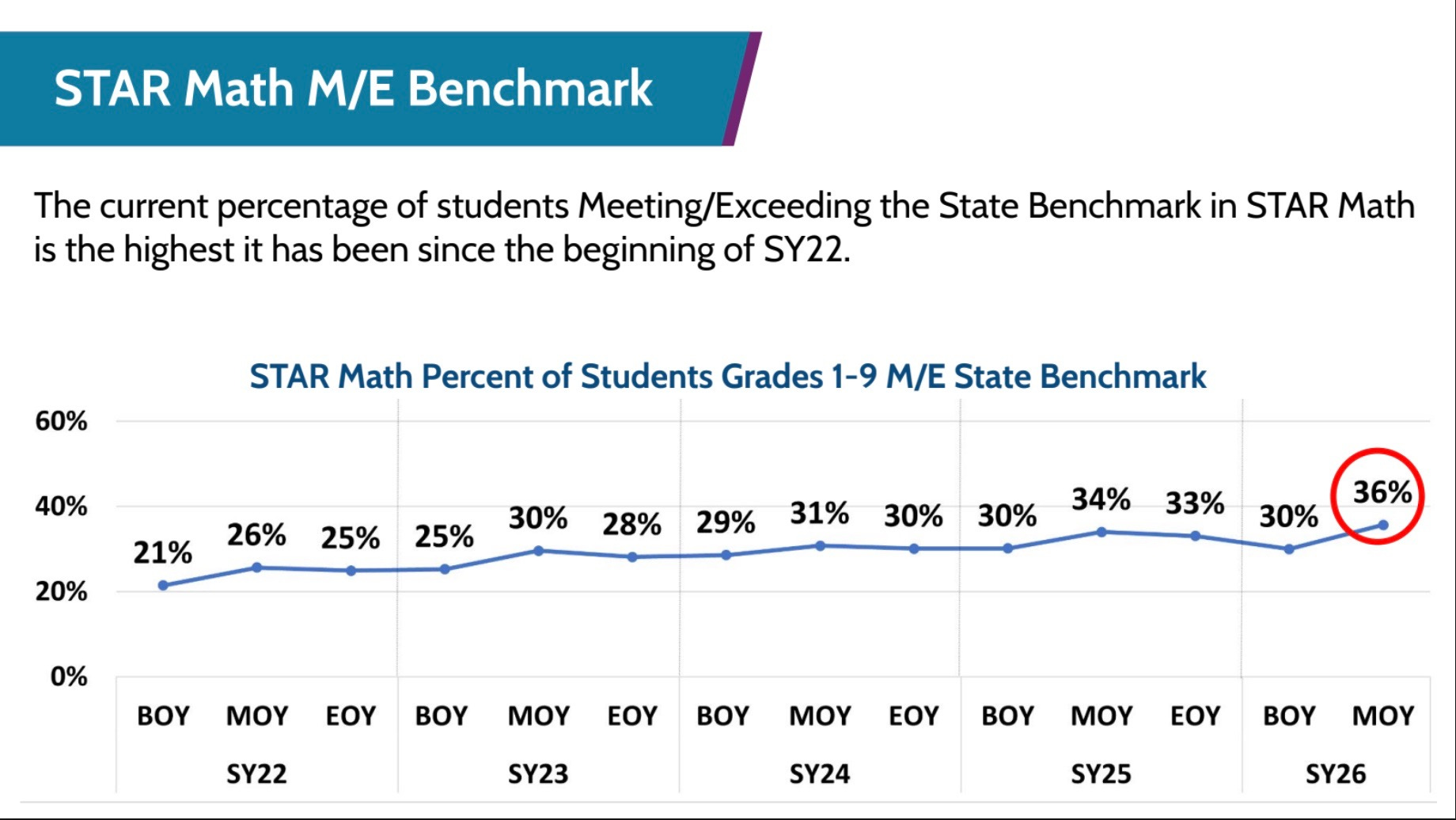
All of this raises a fundamental issue: this proposal is moving forward without without clear evidence of how the new curriculum will perform in our classrooms. Curriculum changes at this scale carry some risk. When teachers are learning a new program, instruction is less consistent at first, which is normal, but can impact students. The district is only in its third year of implementing a new ELA curriculum, and many teachers are finally becoming comfortable with it; adding another large-scale change raises legitimate concerns about capacity, implementation, and teacher buy-in which the district has not yet addressed with evidence or data.
The item now moves to the Teaching, Learning, and Student Success subcommittee on March 26 for further discussion, with approval planned for the April 5 School Committee meeting.
Key Takeaways from the District Realignment Community Forum.
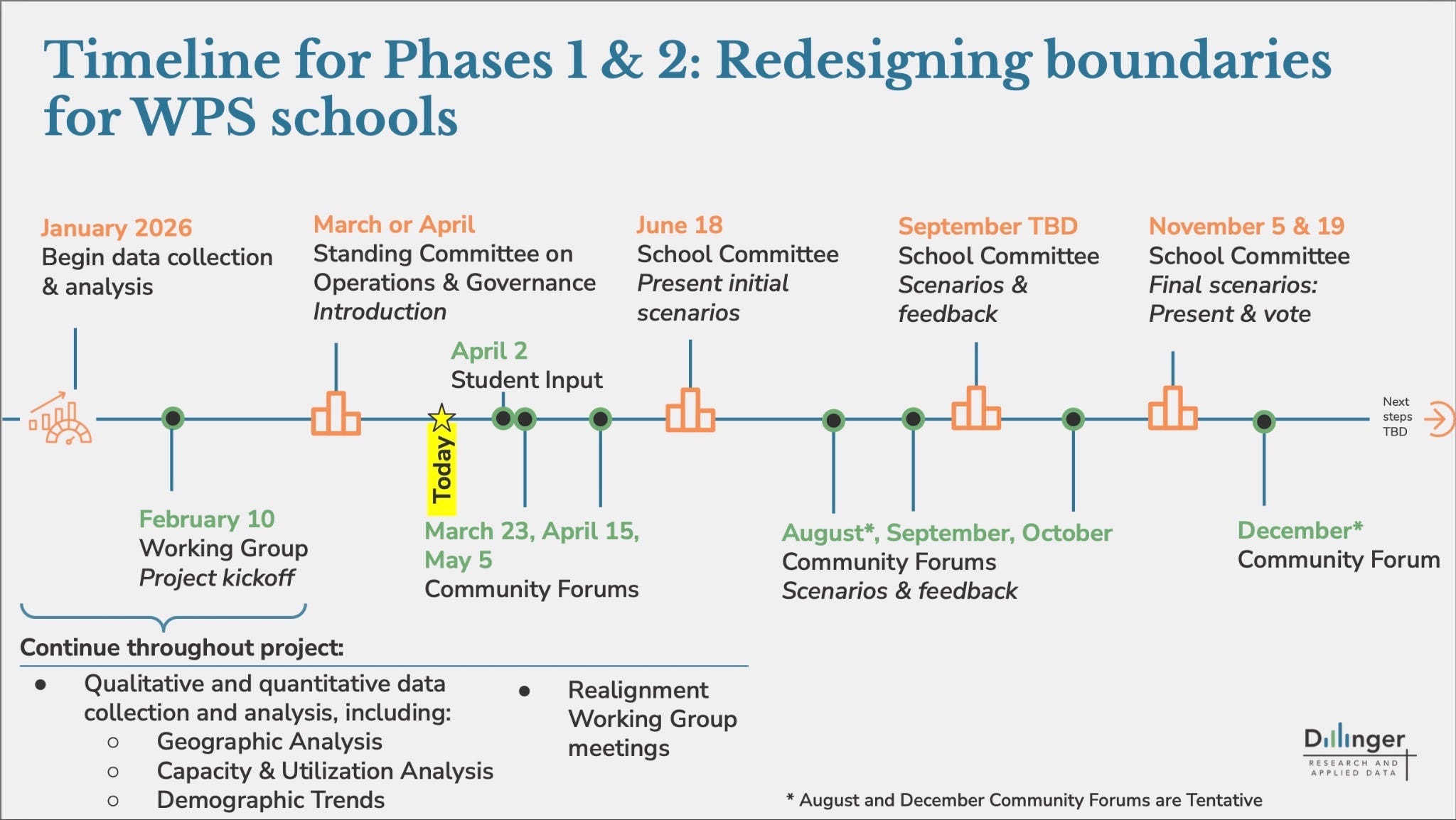
On March 23 there was a district realignment community forum, aka the meeting of the decade (click that link for background, I’m not going to cover that here). The Telegram has some good coverage, too. Basically, the consultant the district hired to facilitate the process gave an overview (you can see the slidedeck here) and then most of the time was an open floor for public comments. There was also an initial input survey and mapping tool to provide feedback. A consistent thread to the public comments was the need to make sure decisions are equitable, transparent, and inclusive from the start. Here are my takeaways:
Transportation: Transportation, or lack thereof, was the topic of the evening. Parents expressed safety concerns, lack of clarity on eligibility, and the need for more access. Bus eligibility, walk zones, and overlapping school start times were identified as major constraints for the district right now. The consultant said they are exploring changing the tiered start times for schools which could potentially allow for expanded transportation access due to improved efficiencies. Though these changes introduce additional complexity to the redistricting process.
Equity & Systemwide Consistency: Participants emphasized the need to address historical inequities, ensure socioeconomic diversity, and create a more consistent, clear enrollment system. Parents voiced frustration with inconsistencies across the system, particularly around magnet schools, feeder patterns, and voluntary transfer policies. These inconsistencies were seen as undermining predictability for families and raising broader equity concerns about who has access to which opportunities.
Student Impact: Families expressed concern about disruption to students, and stressed the need for maintaining peer groups and minimizing reassignment. The consultant emphasized the district’s intent of minimizing disruption, and that efforts will be made to avoid reassigning students already enrolled in schools whenever possible.
School Capacity: The district is analyzing over-enrollment and under-enrollment at schools, with updated capacity data expected soon. People at the meeting felt that they needed that information to better understand the development of school boundary scenarios. And participants emphasized the need to account for future enrollment trends and potential other factors, including shifts in enrollment tied to immigration enforcement.
Community Engagement: While the district has prioritized outreach through forums and surveys, participants raised concerns about accessibility, including the overreliance on technology, language barriers, and bias in how feedback is collected. There were strong calls for more inclusive engagement, especially with multilingual families, and for parents and students to be included in the working group now. (The vibe was an emphasis on NOW, aka YESTERDAY…and just a plug from me to have a public nomination process or something, because inevitably they pick the parents who have political connections.)
Those are my quick takeaways. The next community forums are April 15 and May 5. Mark your calendars!
Family and Community Engagement.
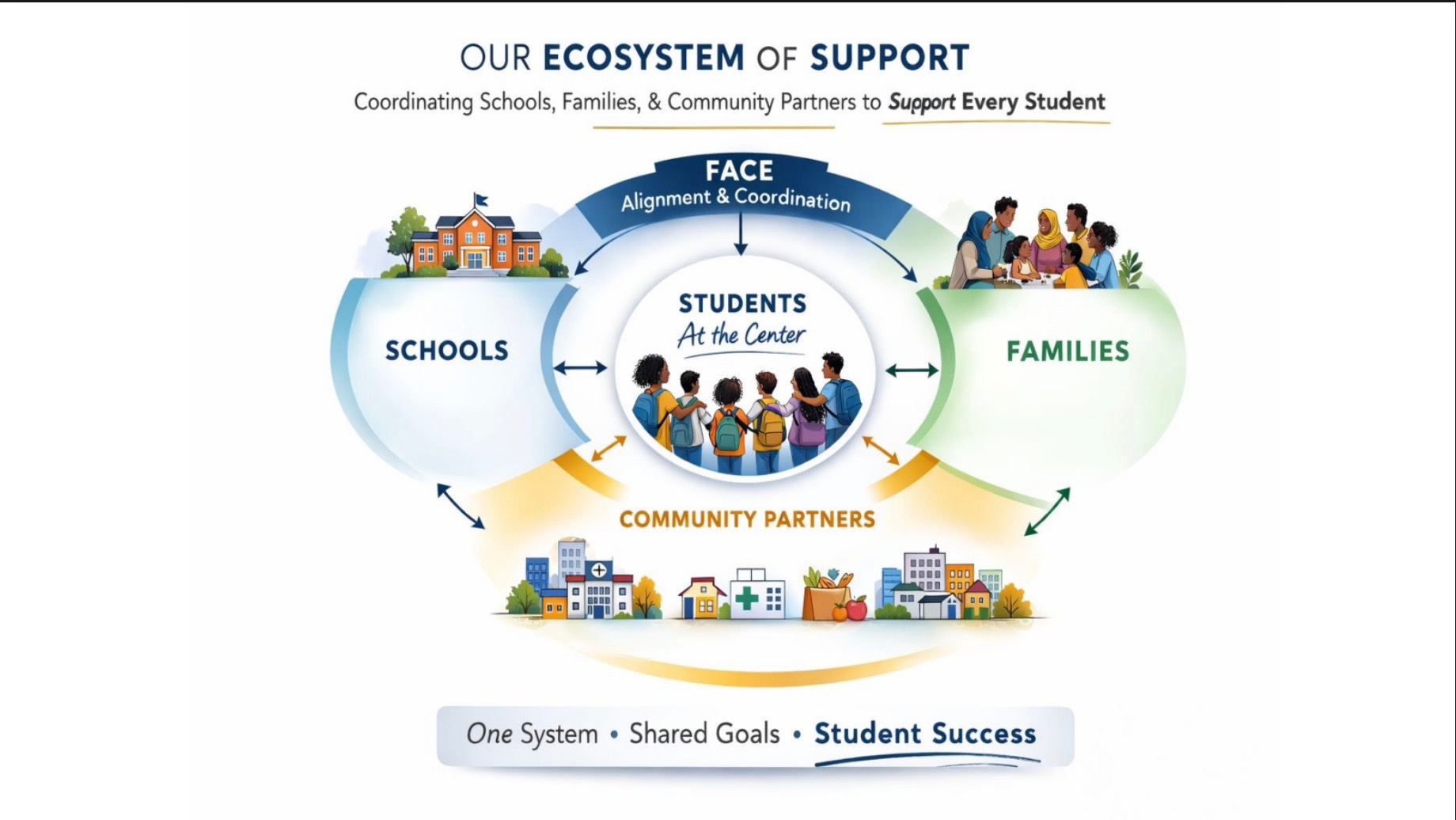
At the March 19 school committee meeting the family and community engagement office and the communications office presented the report of the superintendent on family and community engagement. The report touched on how family and community engagement remains a central focus of the district’s strategic plan, and is grounded in values of partnership, equity, access, shared responsibility, and authentic voice. With the goal of improving attendance, academic outcomes, and students’ sense of belonging, Director Casey Starr emphasized a more intentional, systemwide approach that is moving from reactive responses to streamlined, proactive systems that ensure families don’t fall through the cracks. Key efforts include strengthening parent groups, expanding shared decision-making, increasing access to translation and interpretation, and continuing to build out the role of wraparound coordinators, now in their third year in every school, and universally described as transformative.
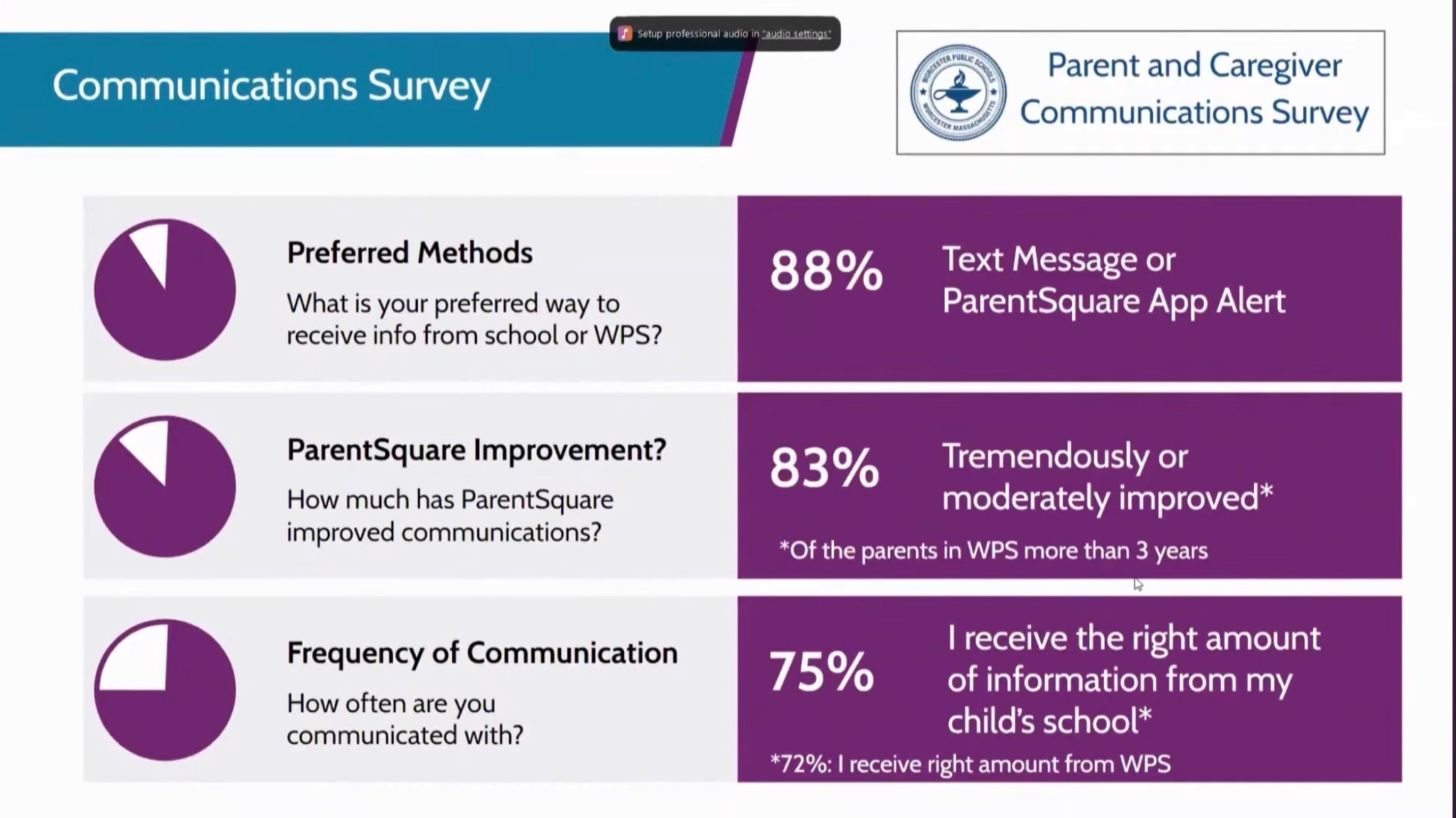
On the communications side, Chief Communications Officer Dan O’Brien described how the district has developed a more cohesive framework spanning internal, external, and crisis communication. Internally, this includes weekly principal updates, a new all-staff newsletter, and a centralized memo system. Externally, tools like the ParentSquare platform have significantly improved communication, particularly through real-time AI translation, with survey data showing strong family preference for text-based updates and overall improvement in communication over time. Next steps include refining data collection of surveys and finalizing a communications framework to guide long-term strategy.
Meeting Moment.
At the March 5 school committee meeting, the district had a report back in response to two items from Jermaine Johnson (district F) and Alex Guardiola (district D) around district accountability and MCAS. The report outlines three key indicators in the state’s accountability report: MCAS scores, chronic absenteeism, and graduation rates. In the meeting moment above, Maureen Binienda talks about ways to “get more points” on these accountability measures, raising the question as to whether the district should chase accountability for accountability’s sake, and what actual outcomes that will have on a student’s education.
This report is specifically for Hispanic students, English learners, and students with disabilities and outlines ways schools are trying to motivate students to take the MCAS seriously, including “friendly competitions.”
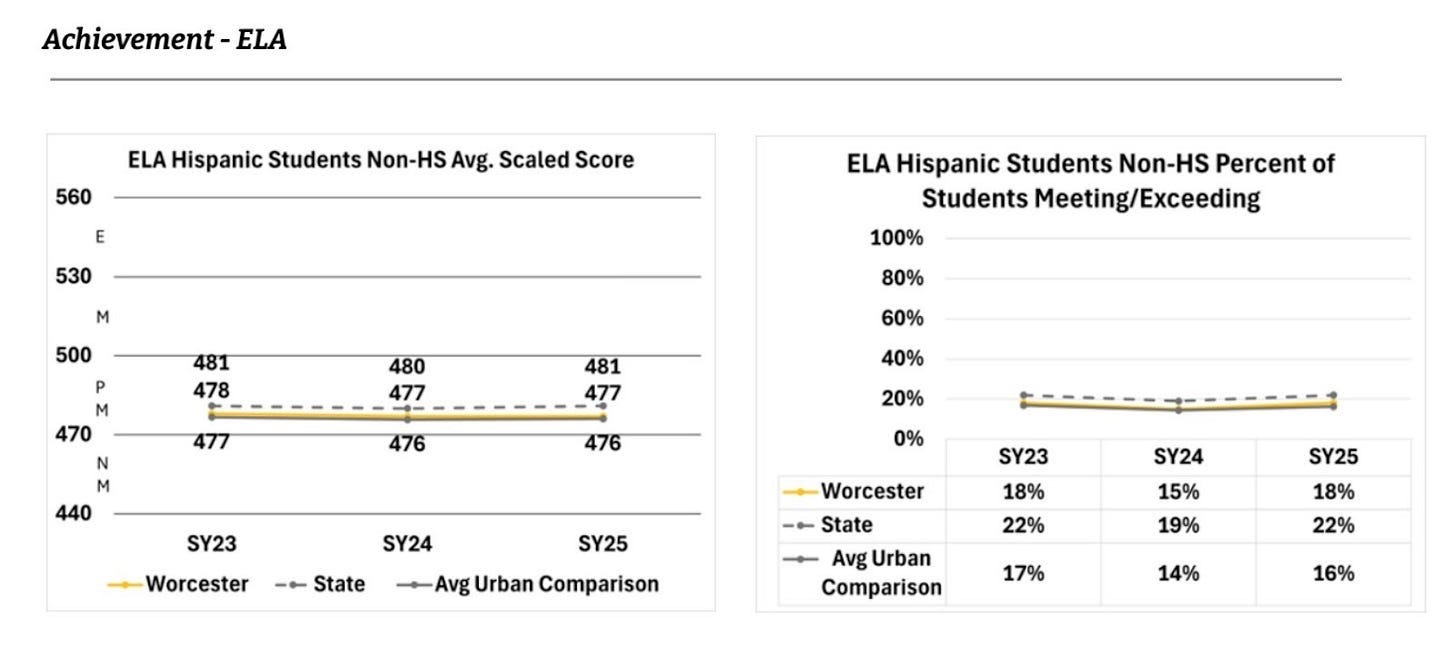
As you see in the chart above, the pattern from previous years continues, with scores fluctuating the same way as the state. This fluctuation continues to raise questions of the validity of the MCAS as an assessment. In terms of the breakdown between the different student demographics in the report, one thing worth noting is the high degree of intersectionality for the Hispanic and English learner groups–last year about 45 percent of English learners also identified as Hispanic. This overlap means that when looking at testing data, nearly half of the Hispanic subgroup’s test scores are heavily influenced by language proficiency. At the end of the report is an extensive description of the district action plan to improve these metrics, as well as a section on roles and responsibilities.
If you read me frequently, you know that when standardized tests come up I will continue to emphasize that:
Out-of-school factors have the biggest impact on MCAS, like language spoken at home, family income, and parent’s education.
Research shows that children who are bilingual and biliterate outperform their monolingual peers on standardized tests, something that is true in Worcester, where former ELs in elementary school have the highest percentage meeting or exceeding expectations on the MCAS of any demographic group.
One third of Worcester’s student body is a year younger than every other district in Massachusetts, so developmentally it is not an equal comparison.
And repeat after me: MCAS scores ≠ literacy rates!
Recommended Reads.
South High basketball players targeted by racist social mediacomments
Worcester adds 20 electric school buses to move city “into the future”
With fewer students and higher costs, many Massachusetts districts weigh school closures and mergers
Upcoming Dates.
All school committee meetings have virtual options with Spanish translation. See the school committee site for more information.
Teaching, Learning and Student Supports is March 26, 5pm
Finance, Operations and Governance is March 30 5pm
School Committee Meetings are April 2 and April 16, 5:30pm
Also.
Just a reminder that it’s budget season and it is the most important thing you can pay attention to if you care about schools. Wish it was a shorter walk radius for secondary schools? Want to have smaller classes? Wish all elementary schools had an after school program? It all comes down to how the school committee decides to allocate the budget. For the details of the preliminary budget, read last month’s brief.
And I guess it should go without saying that all that will go out the window depending on the status of federal funding. WPS gets $52.3 million a year from the federal government, which completely funds student nutrition, head start, and entitlement grants. That money supports 460 jobs and is 6.5% of the budget. According to a Superintendent’s Update on March 10, DESE shared “the preliminary Census data indicates a 10 percent drop in Massachusetts’ share of the national poverty total. Therefore, we anticipate a significant decrease to Massachusetts’ Title I award for FY27.” According to the FY 26 (2025-2026 school year) Budget Book, “These funds support a portion of the Grants Director, 63 instructional coaches, 44 wraparound coordinators, and five other program and support positions.”
Thanks for reading. I hope these briefs are helping you stay informed without feeling overwhelmed. If they are, please consider a paid subscription or a tip to support the dozens of hours of work it takes me to put these together. See you next month!
School committee policy requires “that when an immediate family member, as defined in the Conflict of Interest statute, of a School Committee member or district administrator is to be hired into or promoted within the School District, the Superintendent shall file public notice with the School Committee and the City Clerk at least two weeks prior to executing the hiring.” This has not been happening.
Brava, again. I wish we had your column when my adult children were WPS students.
In the text you list April 5 as the next community forum on the school districting realignment, but the slide shows April 15, and since April 5 is Easter Sunday, I'm betting that April 15 is the correct day. Whether or not one considers scheduling it for Tax Day as bad as scheduling it for Easter Sunday is another matter. :-)