

Welcome to the November issue of WPS in Brief. This month’s post covers key topics from one school committee meeting and two standing committee meetings.
Let’s get to it:
Election 2025.
The election results are in and there is no change in the makeup of the school committee from this term to next term. It’s the first time since 2011 that that’s happened. Maureen Binienda and Sue Mailman broke 13,000 votes each, two of the highest vote getters of all the electeds besides Mayor Joe Petty. Once again proving my oft repeated point that the school committee is not the JV team city council wishes it was.
What’s going on with teaching and learning?
Over the last five months, the teaching and learning team has been a bit lackluster at subcommittee and school committee meetings, at least as compared to the previous year. That dull performance reached a head at the November 20 school committee meeting, where the Executive Directors gave a presentation called “Vision to Action District Improvement Plan.” Of the eighty some-odd reports of superintendent I have watched over the last four and a half years, this was by far the most underwhelming.
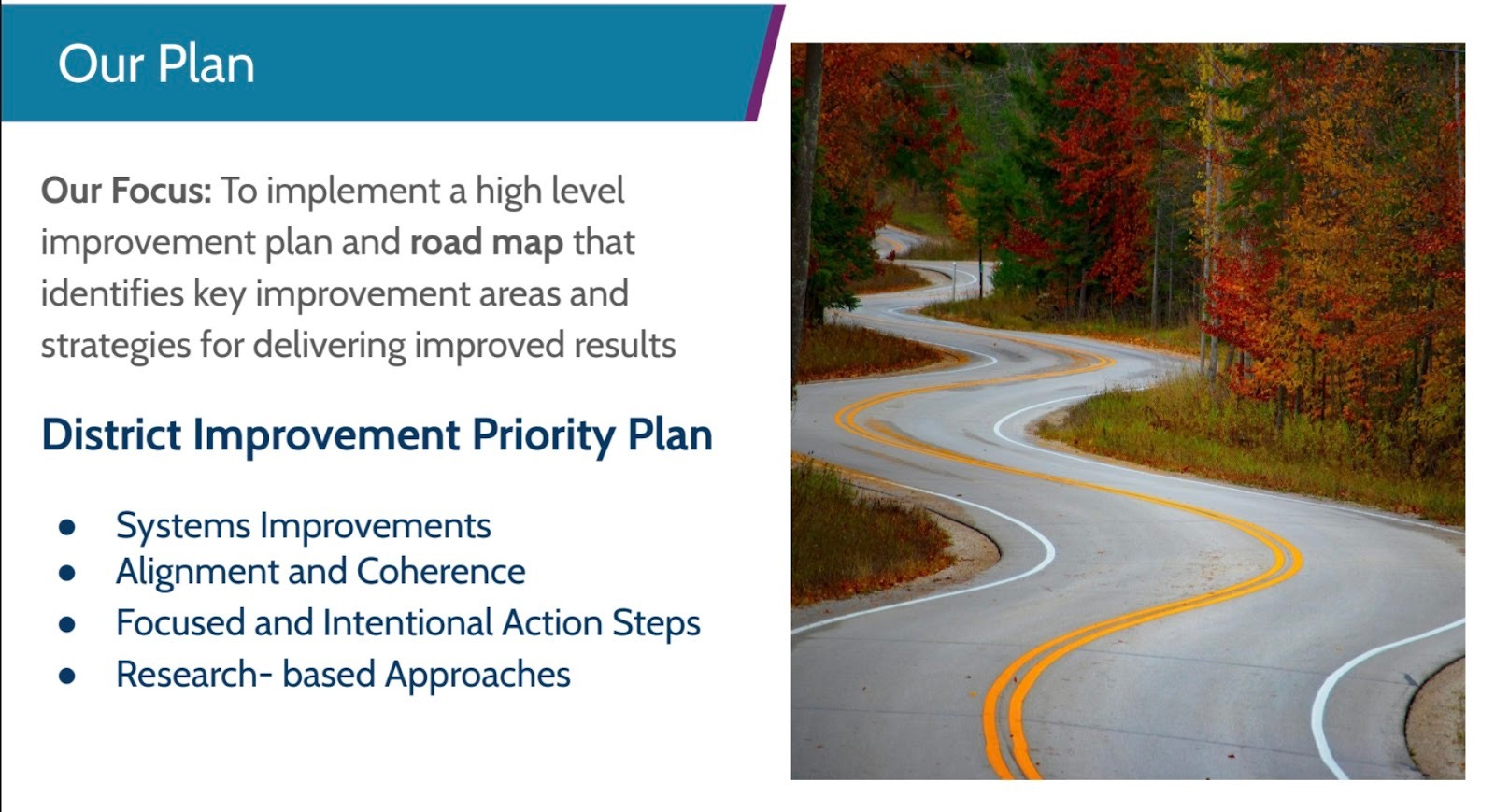
There was a lot of strategic overview of how things connect to the superintendent’s goals, the strategic plan, and the vision of a learner, but no specific examples of what that looks like in action and how it will help bridge student gaps. Honestly, I’m not even sure how to summarize it for you, because it was such a superficial presentation. When it was over, Jermaine Johnson (district F) voiced a similar feeling, saying, “At some point I would like to kind of hear, I guess from our staff members in the field on all this that we’re talking about here, what that actually looks like in the classroom and what they’re actually doing. So I think we get a better sense of not just hearing about it, but trying to get a sense of people coming in and talking about how that relates to our students, and what it looks like in the classroom.”
Recently I’ve noticed from the administration a similar lack of preparedness with other items, as well as a lack of transparency and/or clarity. I can’t make a judgment of whether that is intentional or not, but regardless, it’s a new trend that I feel is worth pointing out. Here are some examples:
Volunteer Policy.
The district finally responded to an item from 2023 to change the district volunteer policy, but recommended no changes. A change in volunteer policy requires some hard conversations, both about what has happened in the past, as well as how to make a policy equitable to families and caregivers with criminal records. Perhaps the district wanted to avoid having that conversation, or didn’t think they’d get much pushback for not changing it. But as demonstrated by public comment at the November 20 school committee meeting, parents and community want to see a change. (See coverage on how it all unfolded from Bill Shaner here, it’s worth a read.) The school committee sent the item back to subcommittee to work on it, now going into the third year of this request.
High School Grading Policy.
After multiple conversations over many public and private meetings, the proposed high school grading policy was finally approved by the whole school committee on November 20. You may remember from my previous reporting that the district recommended a major change in secondary grading policy in a last minute subcommittee meeting, at which the district seemed unprepared. Despite it not passing in committee at the time, the district took a bold step to change the grading system in Woo Edu at the start of the school year. At the November Finance, Operations and Governance (FOG) subcommittee meeting Jermaine Johnson said, “I’m going to tell you, I really, really, really like this, and I am all for it,” but “I guess the nicest way I can say this is that I feel that our knees got cut from underneath us, as a school committee here who should be approving this policy, and that this policy and everything that has gone on should not have taken place and been rolled out or anything should have been done until we passed this…I wish it would have been done differently.
Discipline Data.
The FOG subcommittee discussed a report on two years of discipline data at its November 10 meeting. Some infractions saw significant increases from the year before. Both Maureen Binienda (at-large), who is not on the subcommittee, but spoke during public comment, and Dianna Biancheria (district C), jumped on the increases, making claims about Worcester Schools being unsafe, mostly out of concern for the teachers. If you have any experience working with data (or maybe this is just common sense), making any assumptions using a two-year window is not best practice: it’s difficult to distinguish trends from short-term fluctuations, outliers have a greater impact, and policies can be “overfitted” to a data’s specific noise. I was surprised that no one from the district provided more context (like how exactly discipline data is reported and recorded, that 37H infractions go on a students permanent record, and how the data breaks down from secondary to elementary, and in what settings). This meant that a report that seemed relatively inconsequential to me as someone who watches meetings and talks to teachers every day (I didn’t even cover it in my agenda preview), got an article AND an op-ed in the Telegram. In response, the district sent out a letter to families and there is now a scheduled Report of the Superintendent for December on discipline.
Two-year Kindergarten.
At the November 17 Teaching, Learning and Student Success (TLSS) subcommittee meeting there was a report back on “preppy K” which in the FY24 budget report was described as a pilot of a “Kindergarten preparation classroom…for students aged four years old between September 1 and December 31 to allow for a two-year kindergarten experience and better prepare younger students for future academic success without changing the kindergarten entry age in Worcester.” The pilot only lasted one year and the district wrote: “We feel the pilot’s strict age grouping removed opportunities for our younger children to learn from older role models, limiting the diversity of learning and lessening the chances of peer learning and mentoring opportunities, and that our older students were not able to develop stronger, social leadership skills by helping younger classmates.” Anyone who has spent time around children probably sees that conclusion as an obvious one, one that many a principal has already seen in the decades that Worcester has had kindergarten classrooms. The hypothesis with this “preppy-k” model was that the youngest students were supposed to get TWO years of kindergarten before moving on to first grade. The district was not transparent about that initial purpose in its report, and no one on the school committee was informed enough to ask, or to dig for the reason the pilot ended after the first year.
These specific examples give you a glimpse of what I’ve been noticing around teaching and learning as of late: teaching and learning is not bringing it’s A game to meetings. My hope is that because Superintendent Allen is well liked by all school committee members, he is in a unique position that at least the last three superintendents weren’t. He is from Worcester and has worked for the district for almost three decades, so he doesn’t face the (often unfair) scrutiny that outsiders have faced, but he is also not provincial like many Worcester insiders and past internal superintendents have been. As I wrote about in my profile of him, Allen has taken his experience as a WPS student and converted it into a career that has focused on equity, keeping students at the center of his decisions. His strength is listening and taking action. I believe he is uniquely positioned and able to make impactful change for Worcester students. But, at least on the teaching and learning side, I find myself waiting for the Superintendent to find his voice.
Here’s what else happened this month:
Career Technical Education (CTE).
There was a report at the November 17 TLSS meeting around Career Technical Education (CTE), and Worcester is seeing the benefits of changing the lottery process as enrollment numbers mirror the student body much more equally than in the past. Sue Mailman (at-large) pointed out the high interest in vocational programs, and reiterated again her desire to see Burncoat become a vocational school. (I, personally, would love to see it become a vocational arts school! Boston Arts Academy, which has CTE programs in multimedia entertainment and production, design and visual communications and fashion technology, would be a great model.)
Graduation requirements.
The proposed competency determination for high school graduation (since it’s no longer determined by the MCAS) was up for final approval. This one was a little misleading because it was under an item called “handbook revisions” in the report on FOG and isn’t explicitly called out as a new competency determination policy on the agenda. The item was held in FOG, and in reviewing the video again, it appears to have confused the committee as well, because they never voted to approve it, only to hold it. According to school committee rules (rule 19), policies must be approved by two-thirds vote of the school committee, and also must be voted on individually, so it’s also not clear to me whether the committee can actually approve new policies through the approval of the reports of standing committees. Regardless, the district needs to have a competency determination on file with the state by December 31.
School Bus Tracker.
The transportation department is continuing to work on fixing the MyStop bus tracking app, where a technical glitch with ipads has been overriding how the app collects GPS data from the buses and is creating lag time for families tracking buses. The first year of its use, in 2022-2023, a very small percentage of buses had ipads, which is why it worked so well that year. While they have been trying to resolve it for over a year, Transportation Director Mike Freeman said that the contract for an upgrade that will fix the issue should be out of the city’s legal department by the end of November. The district had originally hoped to have the app upgraded by the start of the school year.
Meeting Moment: Big Tech and Schools
As each year passes that the district is “one-to-one” (this year’s fourth graders are the first class to have had a device assigned to them starting in kindergarten), I have heard more and more teachers, students, and parents discuss their struggles with screen use, educational technology apps, chrome books and AI in the classroom. Here, Worcester parent Cat Holmes raises those frustrations, asking the district to focus on what the research says, all while nursing her three month old (class of 2042).
Bits and Bobs.
Cameras to allow automatic ticketing for violations of people who drive through school stop signs are also in process, as the school committee and the city council approved them last year. The process is currently with the police department, which is working through the complicated process of how ticketing would work, given that this is the first time state law has allowed ticketing via cameras.
The committee approved the Dual Language Program Design Plan.
It’s official that the athletic field at Doherty High School will be named after Lt. Jason Menard and Menard’s parents were in the audience for the approval. It was voted on as the FOG subcommittee report, and not the specific naming item. While this is allowed through school committee rules, in the future, as a sign of respect, the committee might consider pulling out a naming to vote on individually, especially when family members are present.
The committee approved a report on district anti-bullying initiatives.
Upcoming Dates.
School Committee Meetings are December 4 and 18, 6 p.m. at City Hall
Citywide Parent Planning Advisory Council, December 3, 6 p.m. at Doherty High School
Finance, Operations & Governance (FOG), December 15, 5 p.m. at Durkin Administration Building
Teaching, Learning and Student Success (TLSS), December 11, 5 p.m. at Durkin Administration Building
Also.
I am on a technology advisory committee for the district, and I’d love to hear from elementary teachers and parents: send me your thoughts on screen time, Chromebooks, ed tech apps and AI in elementary schools. What do you think is working well and what would you like to see change?
As always, email me with feedback and questions at aislinn.doyle@me.com
I'm wondering if during your next tech meeting you could bring up the smart boards - my son's pre-k teacher had the smart board on all day every day (used for morning meeting but then all day playing music videos or photo slide shows). Even when the kids were engaged in other activities in the classroom, the screen was still on. I've seen this in music classes too, where the smart board screen is playing a video of a music teacher lol and same thing for teachers playing videos of a read-aloud.
I spoke to Dr. Kyriazis this morning who said she'll pass along my concerns to the technology group about smart boards, use of 1:1 devices as babysitters when teachers are absent or during "inside recess," availability of printed texts in the classroom, prioritizing opportunities for handwriting and hands-on/peer-interactive learning, and especially the equity issue, such that low-income students far and way exceed upper-income students in time spent on screens, both while in school and at home.
She does continue to insist that their lawyers say the school has every right to bypass informed parental consent (but did not explain their reasoning). She does not seem to want to acknowledge how Chromebooks are cloud-based internet devices of the lowest quality that track every move a child makes while using it, or that the sensory receptors in our brains cannot distinguish between "educational" and "entertainment" screen time in terms of impact on sleep, visual health, emotional regulation, corrupted attention, etc (even though a lot of educational screen time masquerades as entertainment anyways).
She does make it sound like there has been some progress from last year to this year, which I hope is true. She also claims she'll send me the research they use to make decisions about EdTech..... which will probably require some following up.