

If you find WPS in Brief helpful, please subscribe, share it with someone who wants to understand what’s happening in our schools, or buy me a coffee to support the work.
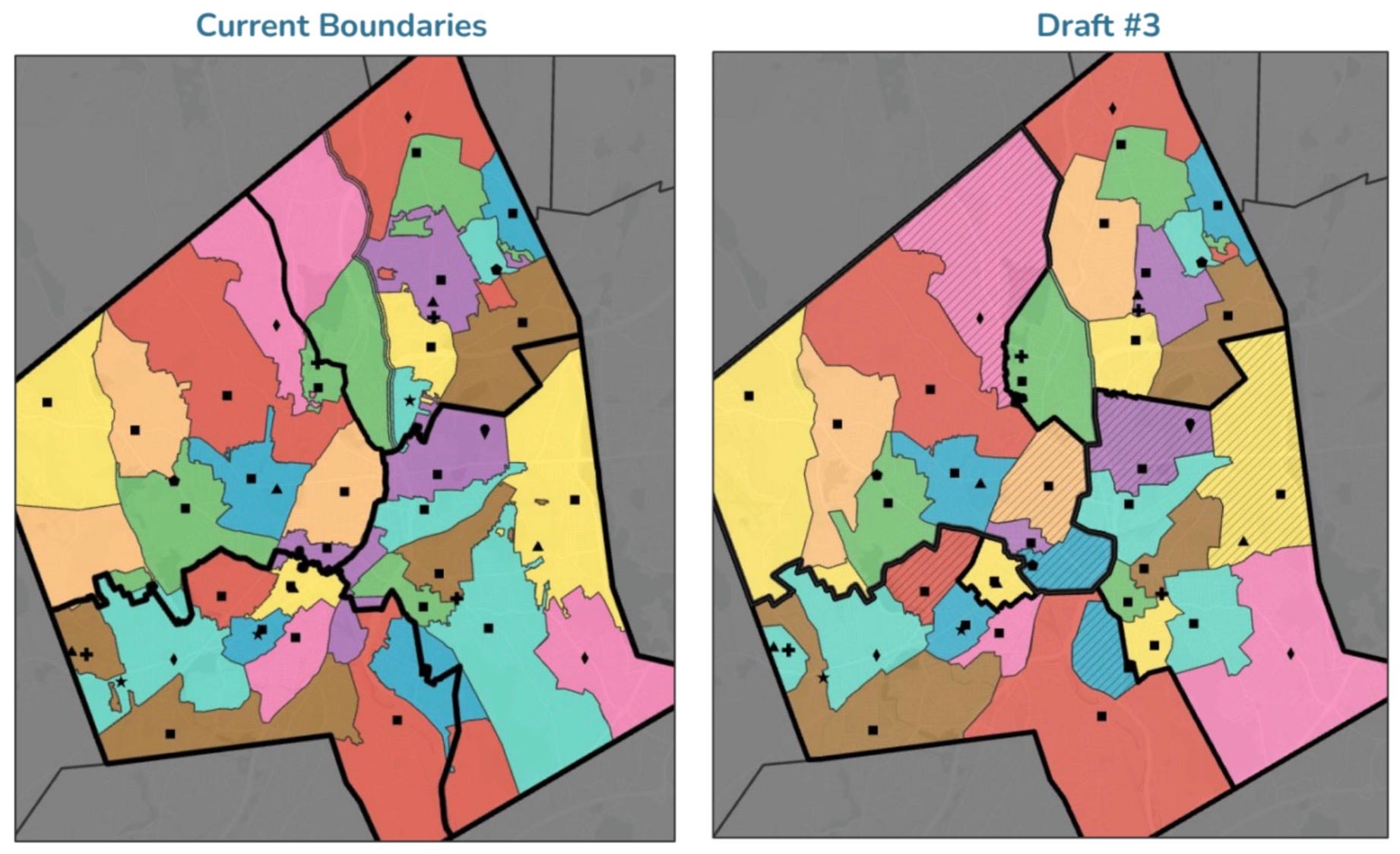
The third redistricting scenario is out, ahead of the Operations and Governance subcommittee meeting this coming Tuesday, Oct 13. If you’ve been following along, the elementary boundaries look pretty similar to the second scenario and seem somewhat settled. The big question in this scenario is what to do about middle and high schools. The consultants drafting these scenarios are trying to balance enrollment while keeping students on predictable pathways. But differences in building capacity and how seats in specialized programs are distributed make that difficult. Some solutions include proportional lotteries, split feeder pathways, and a new proposal: flex zones. Each comes with tradeoffs. And we need to be clear about which school communities would be asked to carry them. Let’s dive in.
Get caught up.
If you’re new to this process—or have understandably lost track of which proposal did what—start with my March overview of why WPS is redistricting, then my explainers on Scenario 1 and Scenario 2. My March meeting recap also covers what families asked for at the first community forum, which I’ll return to at the end.
You can also review the Scenario 3 presentation, the school-by-school enrollment, capacity, and demographic spreadsheet, and the interactive boundary map.
What changed from Scenario 2?
The elementary map looks basically the same, but there are some important changes in the assumptions and options behind it:
The preschool goal now acknowledges that some elementary buildings cannot accommodate a pre-k classroom.
Rice Square is modeled with additional classrooms so sixth graders could remain there.
The secondary model back tracks from Scenario 2’s suggestion to reserve seats in each program by quadrant, and instead uses historical enrollment patterns to predict where students are coming from.
Split feeder pathways for McGrath or Nelson Place and a new flex-zone proposal are being considered to help balance secondary enrollment.
Elementary boundaries.
There aren’t huge changes to the elementary boundaries between Scenarios 2 and 3. But compared with the boundaries we have today, some school communities would look very different. The proposal still includes a neighborhood zone for Jacob Hiatt, a new Granite Street elementary school, a future elementary school at Greendale, and changes to the pockets of neighborhoods assigned to schools outside their immediate area.
Some notable examples: all of Plumley Village would be assigned to City View, rather than split between City View and Belmont. Great Brook Valley would no longer send students to Thorndyke, with students instead divided among Burncoat Prep, Clark Street, and Norrback. Lincoln Village would also be consolidated to Thorndyke rather than divided among multiple schools.
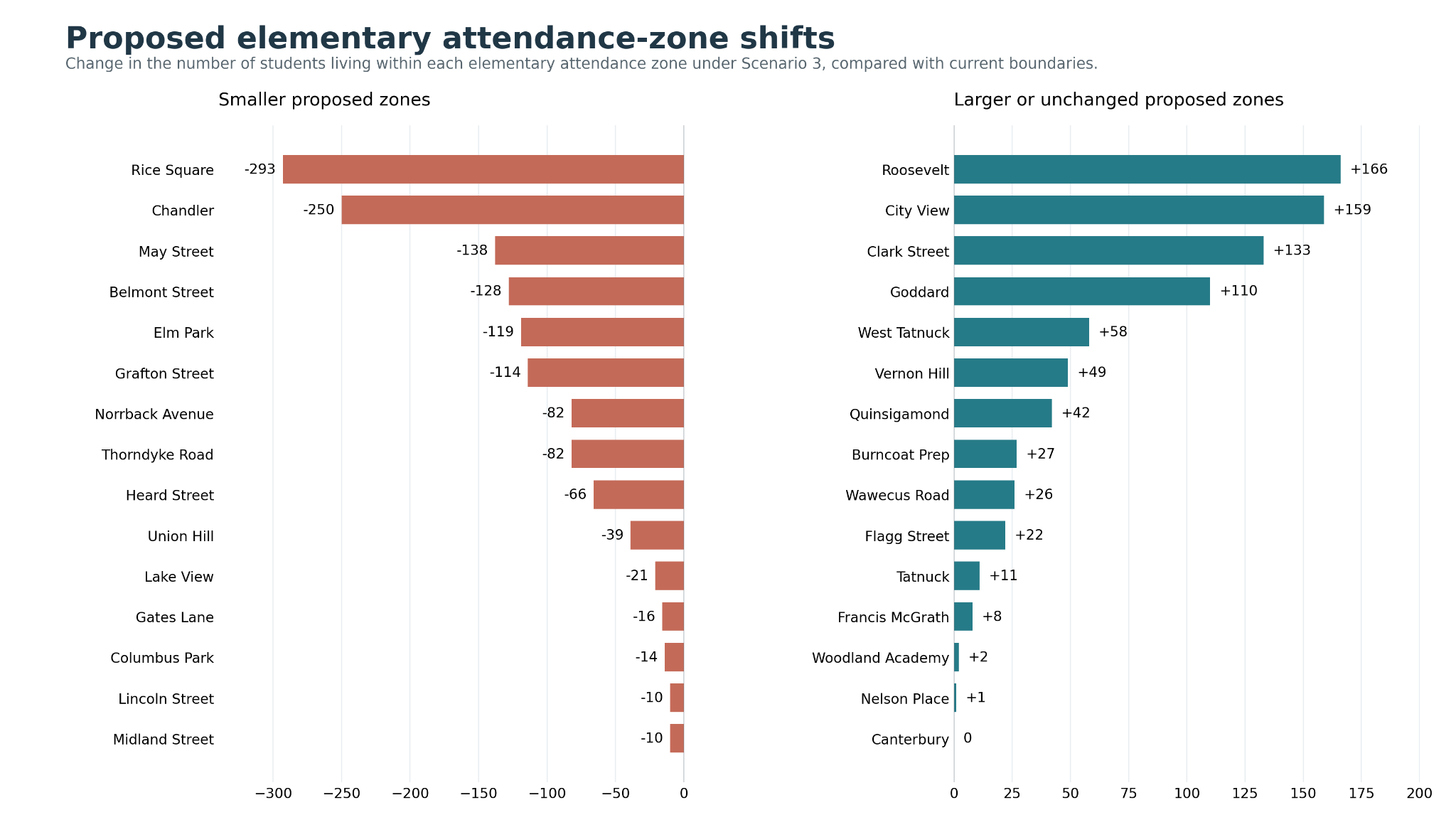
The chart below shows the change in the number of students living within each elementary attendance zone. Rice Square and Chandler would see the largest reductions in the number of students living within their attendance zones—293 and 250 fewer, respectively. May Street, Belmont Street, Elm Park, and Grafton Street would also have substantially fewer students in their zones. Roosevelt, City View, Clark Street, and Goddard would see the largest increases. These are changes in neighborhood-zone resident counts, not current school enrollment or the number of children who would change schools. A small net change can also hide a significant boundary shift if a school loses one neighborhood and gains another. The chart excludes the two magnets and the new Jacob Hiatt, Greendale, and Granite Street neighborhood zones, which have no current-zone baseline.
What does this mean for racial and economic diversity?
On this question, the consultants’ own analysis raises concerns. Using a range of 15 percentage points above or below the district’s approximately 25% white student population, five elementary schools fall outside that range today. Under Scenario 3, eight would. The share of students in those schools increases from 16% to 24%. (These figures exclude WAMS and Worcester Dual Language Magnet.) This is the consultants’ comparison measure, not a state designation of racial imbalance, but even using their relatively broad range, the proposal moves in the wrong direction.
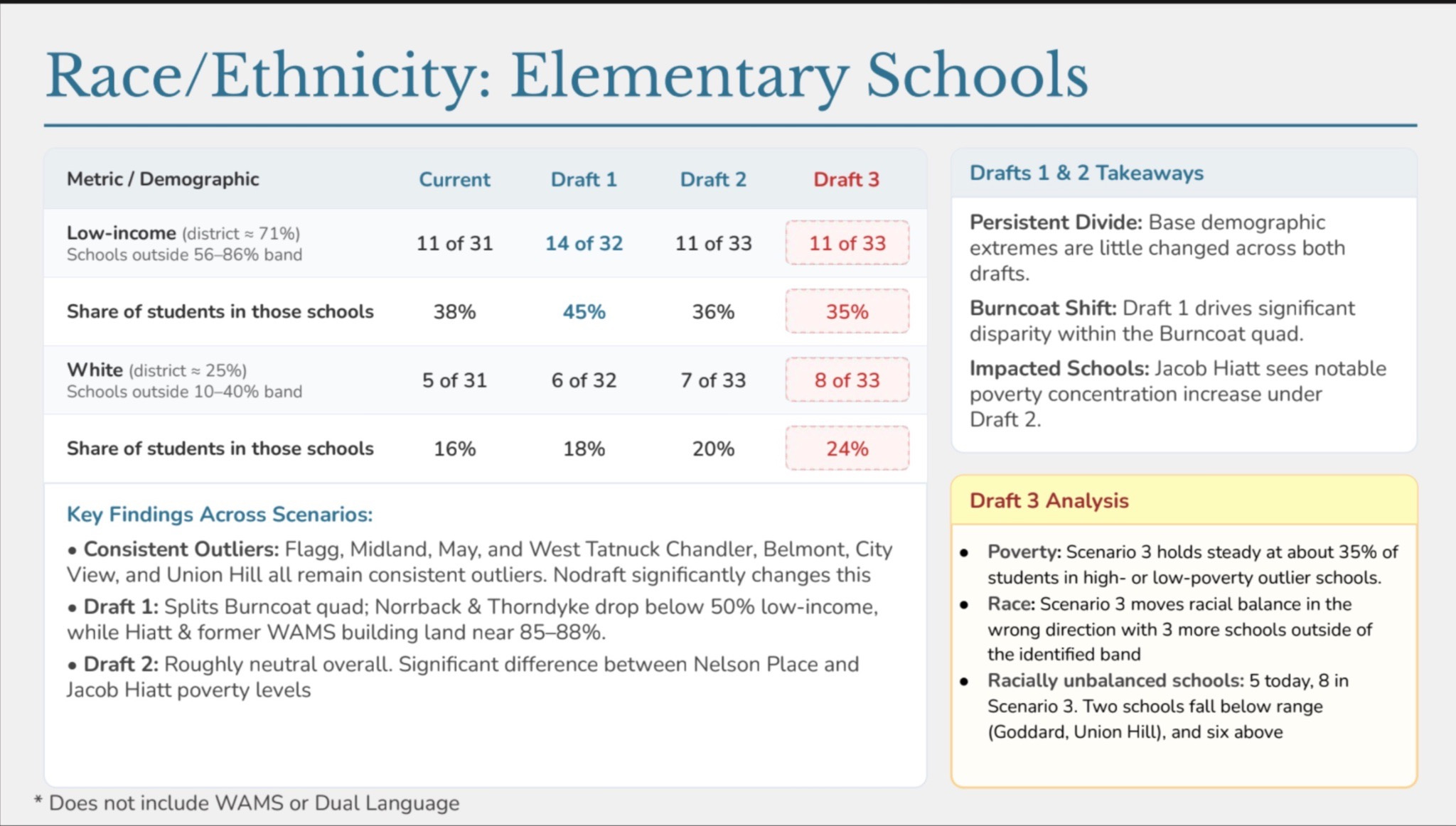
The economic picture changes less. The share of students in schools outside the consultants’ low-income range—56% to 86%—falls slightly, from 38% today to 35% in Scenario 3, while the number of schools outside that range remains eleven. The presentation acknowledges that the same demographic extremes largely persist across the drafts.
I understand that boundaries have to account for buildings, walkability, and enrollment. But at the initial March community forum, families raised socioeconomic diversity and historical inequities as a top concern. If the elementary map is becoming fixed, we should be asking now whether these outcomes are acceptable.
New start times and longer elementary school days.
The proposed school start times generally puts high schools first, elementary schools second, and middle schools last, but there’s exceptions to each one as you’ll see below. Along with changes to start and dismissal times, the proposal includes a longer elementary school day. The move to three tiers is intended to make transportation more efficient.
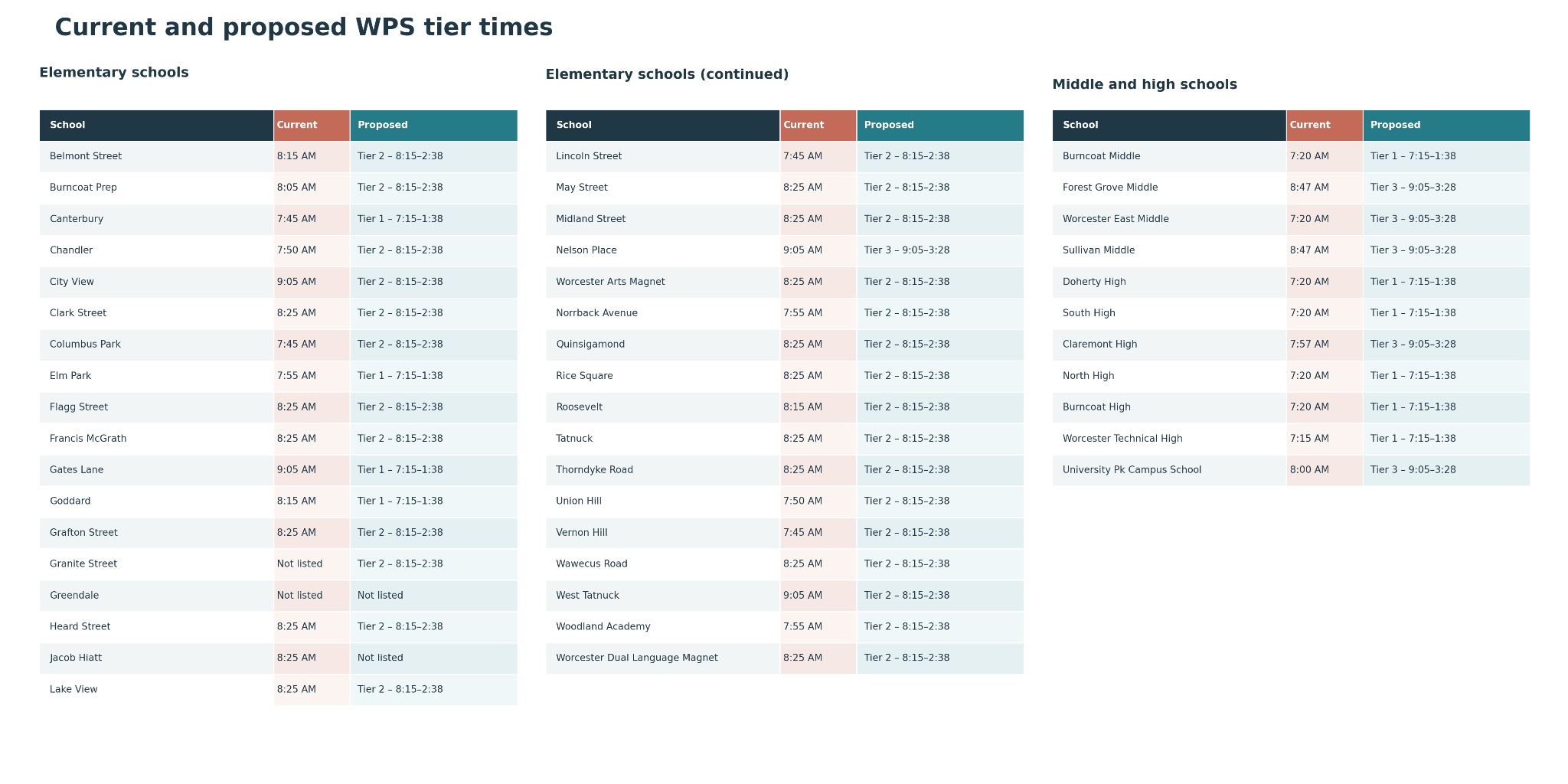
The second scenario had put elementary schools on the 9 a.m. tier, but elementary families raised concerns about how a 9 a.m. start would affect their work schedules, and nonprofit providers raised concerns about their ability to run after-school programs if students didn’t get out until 3:30 p.m. So that’s why the proposal has most elementary schools starting at 8:15 a.m., although some start at 7:15 a.m.
That change comes with a tradeoff, though. The presentation says putting elementary schools in the second tier does not provide as much transportation capacity as putting them at the third. I’d like to see those numbers, just to have an idea of how many students could receive transportation under each option. Because access to transportation is the number one issue that has come out of the community forums so far.
Pre-K, but not at every school.
One of the original goals was to put a full-day preschool classroom in every neighborhood elementary school. Scenario 3 acknowledges that some smaller buildings don’t have room for that alongside their existing grades and specialized programs. Granite Street, Wawecus, Heard Street, May Street, Midland, and Lincoln Street are identified as schools without enough space for pre-k.
New schools and classrooms.
The elementary plan depends on opening new schools and adding classrooms. That’s an exciting prospect, but also a big commitment when WPS is facing budget constraints next year and beyond.
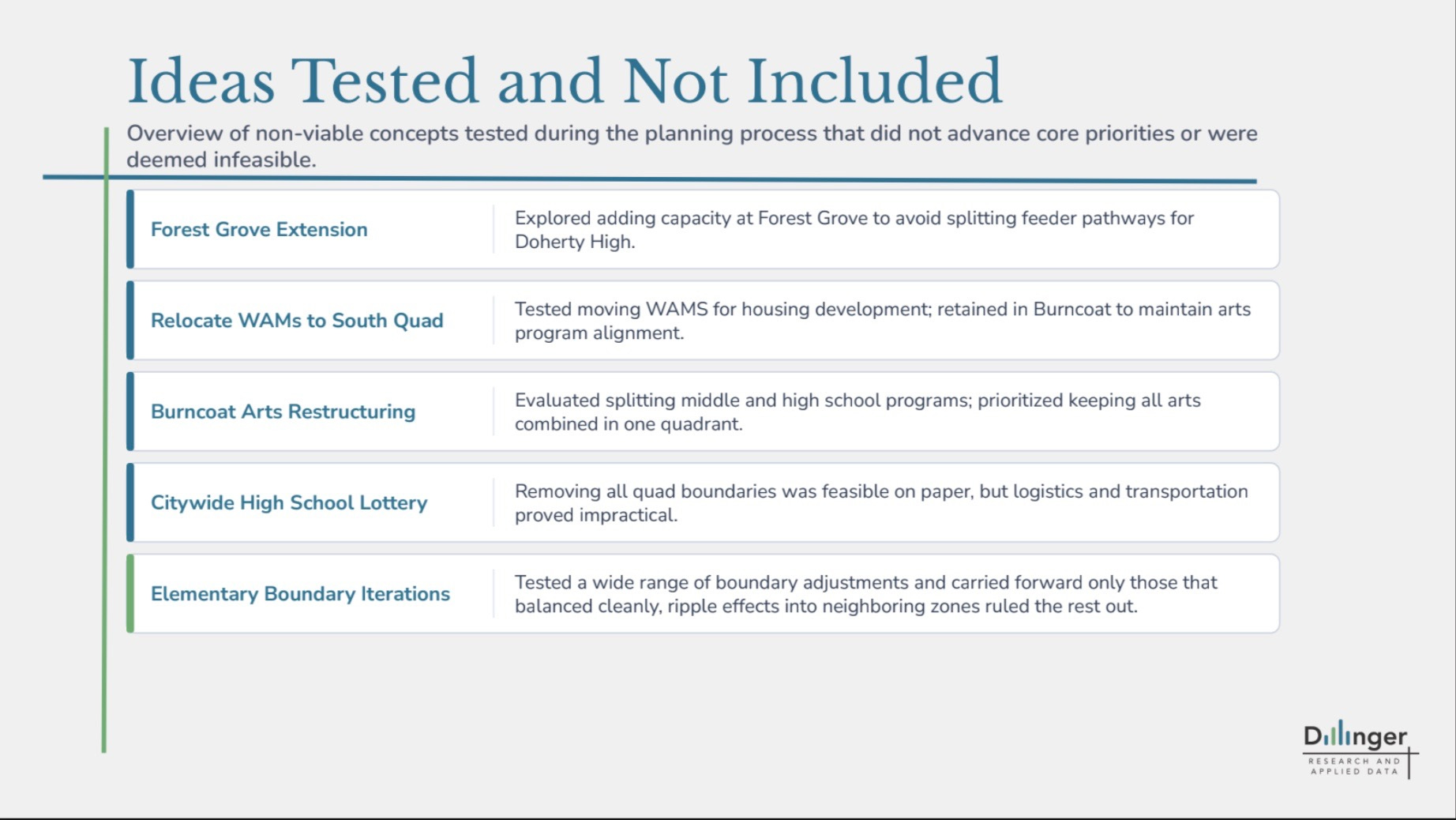
Greendale is proposed to help accommodate growing enrollment in the Burncoat quadrant. The presentation projects average elementary utilization of approximately 95–100% as Curtis Apartments fills, if WAMS remains as it is and no other portfolio changes are made. But Greendale would not open immediately. Head Start would remain there until the conversion, which the presentation places around 2032. It also acknowledges that the building in its current condition is not ideal for Pre-K through sixth grade. We need to understand the renovations and costs, when crowding would occur, and how students would be accommodated before Greendale opens—or if it is delayed. The consultants also considered moving WAMS outside the Burncoat quadrant, but set that aside to maintain quadrant alignment with the middle and high school arts programs. Opening Greendale also involves potentially moving Head Start to the University Park Campus School building while exploring a merger or co-location between UPCS and Claremont.
In the north quadrant, Granite Street would reopen as a neighborhood elementary school in the current Gerald Creamer Center building. That would mean potentially relocating the GCC to the Fanning Building.
At Rice Square, Scenario 3 is modeled with four additional classrooms so sixth graders could go back there (they are currently at Worcester East Middle). The district’s capital plan already lists a $1.6 million modular replacement for 2028–29, but it’s unclear whether the additional classrooms would be part of that project or something separate. Are we replacing existing space, adding capacity, or both—and when would those classrooms be ready? Several other modular replacements are included in the district’s five-year capital plan. If redistricting better distributes students across existing buildings, could it reduce the need for some of those projects? I’d like to understand how the boundary plan and facilities plan fit together. If the school committee approves boundaries that depend on these projects, what are they committing to fund—and what happens if they don’t follow through?
Utilization.
The consultants identify 80–90% as ideal building utilization, leaving room for enrollment changes and balancing class sizes. Scenario 3 brings elementary schools into a range of 71–90%, with districtwide elementary utilization around 81%, excluding magnets but including the future Greendale school. These numbers have been revised to account for preschool classrooms, specialized programs, and how buildings are actually used, including substantially separate classrooms.
Several schools would still be below the consultants’ ideal range and that concerns me. We have heard over and over again that birth rates are declining, as are school enrollment trends, so what would utilization look like five or ten years from now? We’re proposing to open new schools while some existing schools would already be below the ideal range. Could that leave us discussing consolidations or closures a few years later? I’m not saying that’s inevitable, but I want to understand how this plan holds up under the district’s enrollment projections.
Balancing Middle Schools and High Schools.
The bigger unresolved question is how to balance middle and high school enrollment. The buildings don’t have matching capacities within each quadrant, and where students attend specialized programs affects how much room is available for everyone else. Scenario 2 proposed proportional seat allocations by quadrant for districtwide programs. Scenario 3 steps back from applying that across all programs, instead assuming historical enrollment patterns. That has consequences, with models showing Worcester East Middle would be at approximately 98% utilization, while Burncoat High would be at 56%. Doherty High would be at 91%.
Something has to give. If we cannot have districtwide programs with lotteries by quadrant, the other options are sending an elementary school community to a different high school than its middle school classmates, or use flex zones to adjust assignments as enrollment changes. These options can be combined, but they put the responsibility for balancing enrollment in different places. I did appreciate this slide in the presentation that outlines some of the things that were explored by the consultants before they put these ones forward:
Split feeder pathways.
One option for balancing middle and high school enrollment would have students attend middle school in one quadrant and high school in another. Their elementary school community would stay together, but they would leave some of their middle school classmates behind when they moved on to high school.
That is what the presentation proposes as an option for Francis McGrath: students would attend Forest Grove Middle, but then go to Burncoat High instead of continuing to Doherty with other Forest Grove students. This would raise Burncoat High’s utilization from approximately 56% to 69% and lower Doherty’s from 91% to 85%. The presentation offers Nelson Place as an alternative: sending its students to Burncoat High would bring Burncoat’s utilization to approximately 75% and Doherty’s to 82%.
These options would improve the balance between Burncoat and Doherty. But they would do so by making an exception to one of the original goals of redistricting: keeping school communities together through elementary, middle, and high school. For the most part, this scenario preserves that continuity. But McGrath or Nelson Place would be asked to give it up so other school communities could keep it.
Flex zones.
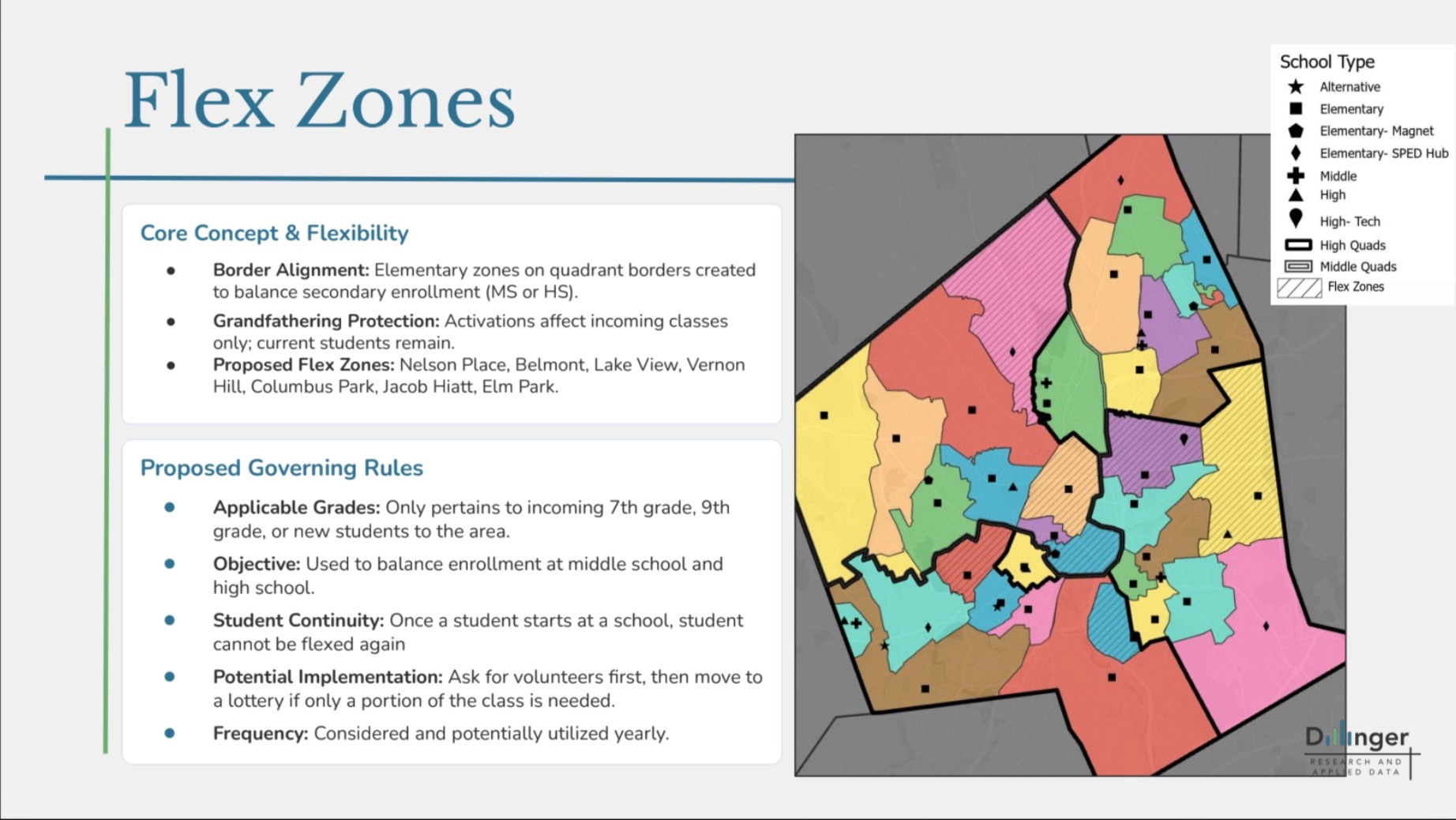
Scenario 3 introduces another option to manage middle school and high school enrollment: flex zones. The proposed zones are Nelson Place, Belmont, Lake View, Vernon Hill, Columbus Park, Jacob Hiatt, and Elm Park.
These elementary neighborhoods could have their middle or high school assignments adjusted to adjacent quadrants to balance enrollment. Lake View could go to Burncoat or Worcester East Middle, for example, or Columbus Park could go to South or Doherty. The proposed rules would apply to incoming seventh graders, incoming ninth graders, and students newly enrolling. Students already enrolled would stay at their school, and once a student starts at a school, they could not be flexed again. The district would ask for volunteers first, then potentially use a lottery if there are not enough volunteers. This gives the district flexibility, but it asks families in particular neighborhoods to live with uncertainty. What criteria would trigger a need to flex, and who would make that decision? Worcester is notoriously opaque about this stuff (cough, cough, voluntary transfer), so the School Committee would need to lay out clearly in policy how this would work before the scenario gets approved.
One of the original goals of redistricting was more predictable pathways. So while flex zones could help balance buildings, school committee needs to acknowledge the tension between those two things. And if they’re reluctant to move programs or distribute seats through proportional lotteries, they’re choosing to put more of that uncertainty on neighborhood school communities.
Dual language.
The scenario does not identify where the dual language high school program would be located, even though families have already been told at the Burncoat building meetings that it will not continue at Burncoat like it is now. Since the district is using quadrant alignment to justify keeping the arts magnet programs together, it should apply that same standard to dual language. Locating the dual-language secondary pathway in the Doherty quadrant—and moving Woodland into that quadrant—is one way to provide that alignment. If the district proposes a different approach, it needs to explain how it would preserve the same program continuity it has prioritized for the arts magnet. Families deserve to know how their children’s dual language education will continue through high school, and that should have been part of this scenario, not something figured out afterward. Dual language students deserve the same attention to program continuity that the district has given to other programs.
What happens next.
We have one more scenario to come before the School Committee decides which changes to move forward with. As we get closer to that decision, it’s worth returning to what families asked for at the initial community forum: more access to transportation, more equitable access to academic opportunities, consistent enrollment policies, and less disruption to students and their school communities. Do we feel like it’s moving in that direction? Where the proposal falls short, there is still time to ask for changes.
The process is also moving into the specifics of implementation—the decisions that will turn a hypothetical map into real changes for children, families, and schools. Would new boundaries apply to all students at once, or only to incoming classes? Who could remain at their current school, and what would happen to younger siblings? How would transportation work for students staying at a school outside their new assignment? If students are grandfathered into their current schools for five years, how much would that cost and how long would it delay relief for overcrowded schools? Which changes could happen in existing buildings, and which would depend on funding, construction, or program moves? Who would be responsible for carrying out these transitions, and what happens if those plans change? Clear implementation and enrollment policies need to be in place before the School Committee takes a final vote.
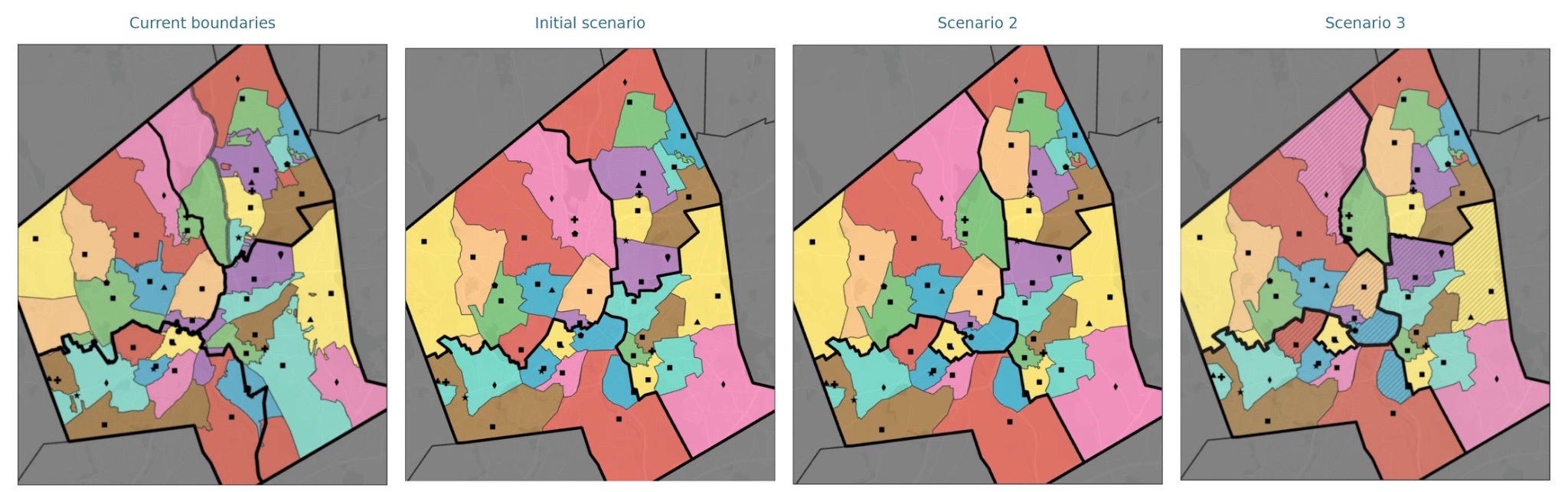
Let me know in the comments what makes that scenario your preference, and what would you still change.
There are still opportunities to weigh in. The next public meetings are October 13 at 6 p.m. at Vernon Hill Elementary and online, October 19 at 3 p.m. at Chandler Elementary, October 26 at 6 p.m. at Forest Grove Middle and online, and November 7 at noon at Goddard Elementary. You can share feedback at those meetings or email alignment@worcesterschools.net and school committee members. The district’s project website has the proposals and additional information. Whether you support a change, oppose it, or need more information, now is the time to say so. Think about what it means for your own children, but also what will make WPS better for children across the city—including those who haven’t started school yet.
Thanks for reading. Have a great week.